Key Takeaways
- A personalized ice mold is the broad category; a monogram ice mold is a narrower case where initials, a name, or a small logo is engraved into the cavity so the mark appears in the ice itself.
- Customization in this category normally covers cavity design, product shape, size, color, logo, and packaging — each item should be confirmed in writing before tooling begins [K2].
- Custom-order MOQ typically starts at 500 pcs, but the final number can move with design, tooling, packaging, product requirements, and production scheduling [K3].
- Lead time is a sequence, not a single number: mold tooling usually takes about 15 working days after 3D design confirmation, custom samples usually 7–10 working days, and mass production usually 15–20 working days [K3].
- Monogram legibility problems are cheap to fix at the 3D review stage and expensive to fix after the mold is cut.
1. Introduction
Ice used to be a commodity. Today it is a surface that carries a brand: a hotel bar that freezes its initials into a single large cube, a coffee roaster that sells trays alongside beans, a wedding supplier that delivers monogrammed ice to the reception, a promotional agency that wants a logo to survive in a drink for twenty minutes.
The problem for buyers is not a shortage of suppliers. It is a shortage of clear information about what is actually being customized, what the minimum order really is, how long the project will take, and where the technical risks sit. Three phrases get used almost interchangeably online — personalized ice mold, monogram ice mold, and customizable ice cube trays — yet they describe different scopes of work, different design files, and different commercial terms.
This guide separates those terms, walks through how a monogram ice project moves from an idea to a shipped carton, and gives buyers a checklist they can use in a first supplier conversation. It draws on a verified silicone OEM/ODM product knowledge base covering custom silicone ice molds, customization options, sampling, tooling, and lead-time terms [K2][K3].
2. Personalized Ice Molds, Monogram Ice Molds, and Customizable Ice Cube Trays: What Actually Differs
Core conclusion: the three terms describe three different scopes — buyer-defined appearance, mark transfer to the ice, and tray-level format. Buyers who confuse them tend to brief suppliers incompletely and then discover a gap after the sample arrives.
A personalized ice mold is the umbrella term. It means the mold has been produced to a buyer's specification rather than taken from a standard catalogue — a shaped cube, a large slow-melting block, a sphere, or a novelty silhouette. In a verified product portfolio, ice block molds sit in the household line while ice cube trays and ice ball trays sit in the promotional line, which shows how differently the same basic function is positioned depending on the buyer's channel [K1].
A monogram ice mold is a subset of the personalized category. The defining feature is a mark — one initial, a set of initials, a short name, or a simplified logo — cut into the cavity so that the frozen piece carries that mark. Practically, this changes the design brief: the mark has to survive freezing, release, and handling, so stroke width and orientation matter as much as the artwork itself.
Customizable ice cube trays describe the tray as a product rather than the ice as an object. Here the buyer controls cavity count and layout, tray dimensions, lid configuration, colour, and retail packaging. Customizable ice cube trays are frequently developed as private-label retail items or promotional giveaways rather than as a single-logo project.
A useful decision rule before contacting a supplier:
- If the goal is what the ice looks like as an object, you are buying a personalized or monogram ice mold.
- If the goal is what the customer takes home and uses repeatedly, you are developing customizable ice cube trays.
- If the mark must be visible in the drink, treat it as monogram work from the beginning, not as a colour or packaging upgrade added later.
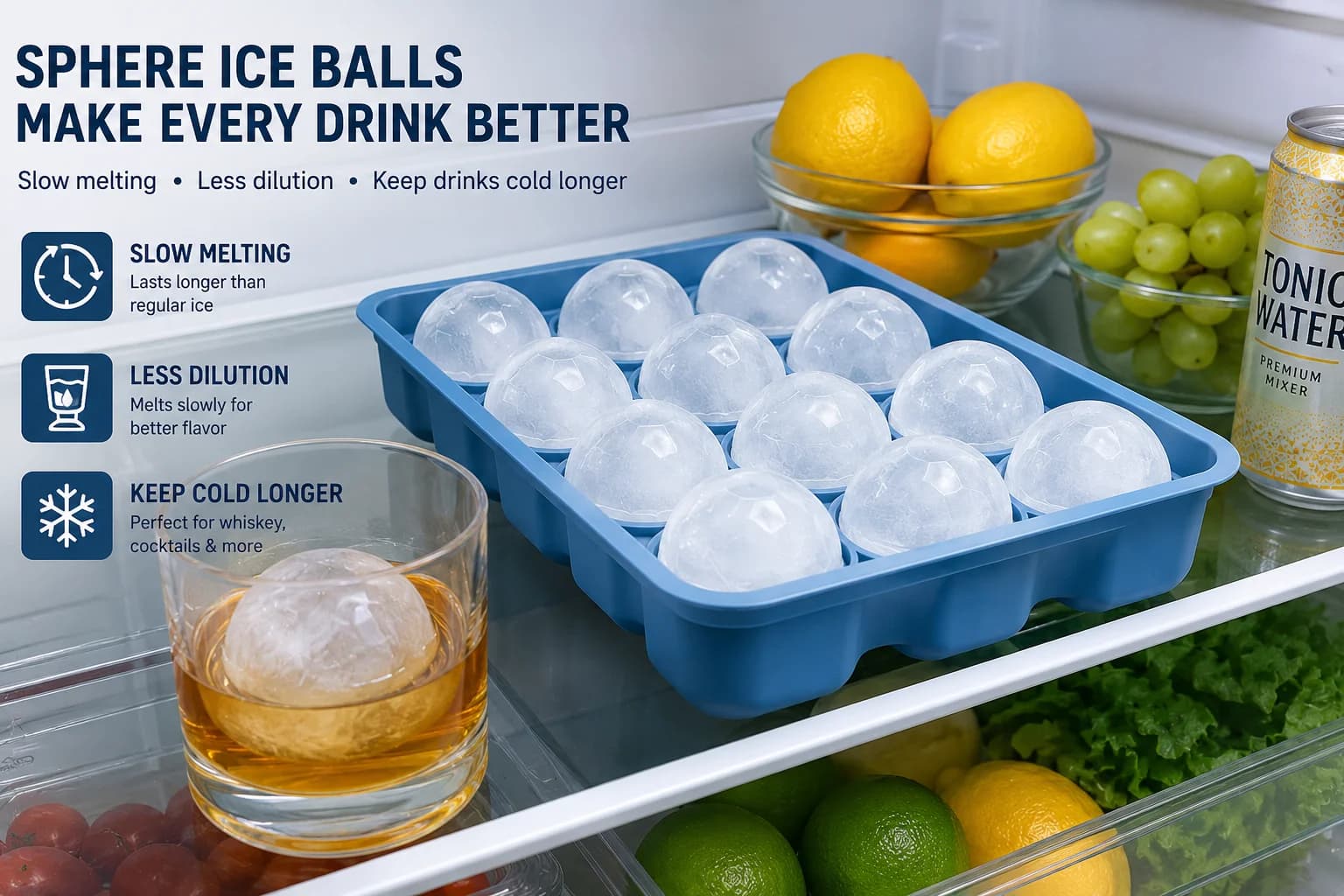
For buyers scoping a first project, the starting point is normally a review of custom silicone ice molds and the customization dimensions available — cavity design, product shape, size, color, logo, and packaging [K2].
3. Designing a Monogram Ice Cube Tray: Cavity, Shape, Size, Colour, and Logo
Core conclusion: in monogram work, the binding constraint is legibility at ice scale, not mold manufacturing capability. Getting the 3D review right is the highest-leverage step in the whole project.
Silicone ice molds are typically customized along six dimensions: cavity design, product shape, size, color, logo, and packaging [K2]. A monogram project touches at least four of them at once, which is why the brief should be written rather than described verbally.
Four design considerations decide whether a monogram reads cleanly:
- Mirror orientation. The cavity is a negative. If the artwork is not reversed at the design stage, the ice releases with readable text — but the mold looks wrong to an inspector, or vice versa, depending on which surface carries the mark. Confirm which surface holds the mark and which direction it should read.
- Stroke weight and letter spacing. Thin, high-contrast typefaces that look elegant on a business card often disappear in a frozen block. Monograms with heavy strokes and generous spacing survive far better than fine serif letterforms.
- Recessed versus raised marks. A recessed mark produces a raised letter in the ice; a raised mark produces an incised letter. Recessed marks are generally easier to read from an angle and less prone to trapping air.
- Draft and release. Any feature added to a cavity can affect how the ice releases. This is where a physical sample earns its cost — none of it can be judged reliably from a flat artwork file.
Colour and packaging are the parts of the brief most often left to the last minute. Colour affects perceived product tier and matters more than buyers expect in retail; packaging determines whether the product can be sold as a gift item or only used in-service. Both should be specified in the same document as the cavity design, because they affect tooling, sample approval, and scheduling.
Because the mark is the whole point of the product, it is worth treating design-file preparation as a deliverable in itself rather than as an administrative step. Vector outlines, defined mark placement, and a clear statement of which letters are combined are the difference between one sample round and three.
4. From Design File to Delivery: How a Custom Ice Mold Project Runs
Core conclusion: a custom ice mold project follows a fixed sequence — design review, design-file confirmation, tooling, sampling, approval, production. Each stage starts only after the previous one is confirmed, so compressing the sequence without confirming inputs is the main cause of delay.
The sequence used in verified OEM/ODM operations runs as follows [K3]:
- Design review. The supplier reviews the buyer's design files and project requirements. The mold fee is quoted at this point rather than beforehand, because it depends on cavity complexity, mark detail, and tooling requirements [K3].
- 3D design confirmation. The mold lead time clock starts here, not at the first email.
- Tooling. Typically about 15 working days after the 3D design is confirmed [K3].
- Custom sampling. Usually 7–10 working days after design and specification confirmation [K3].
- Sample approval. Colour, mark legibility, release behaviour, and packaging are checked against the agreed specification.
- Mass production. Usually 15–20 working days after the order and production details are confirmed [K3].
- Inspection, packaging, and shipping.
The published terms make an important point for planning: sample lead time is measured after design and specification confirmation, and production lead time after order and production details are confirmed [K3]. A project that spends three weeks circulating artwork internally will not be saved by a fast factory. Buyers should budget their own review time separately.
| Stage | Typical lead time | Clock starts after |
|---|---|---|
| Stock sample | 1–2 working days | Stock availability and shipping arrangements confirmed [K3] |
| Mold / tooling | About 15 working days | 3D design confirmed [K3] |
| Custom sample | 7–10 working days | Design and specification confirmed [K3] |
| Mass production | 15–20 working days | Order and production details confirmed [K3] |
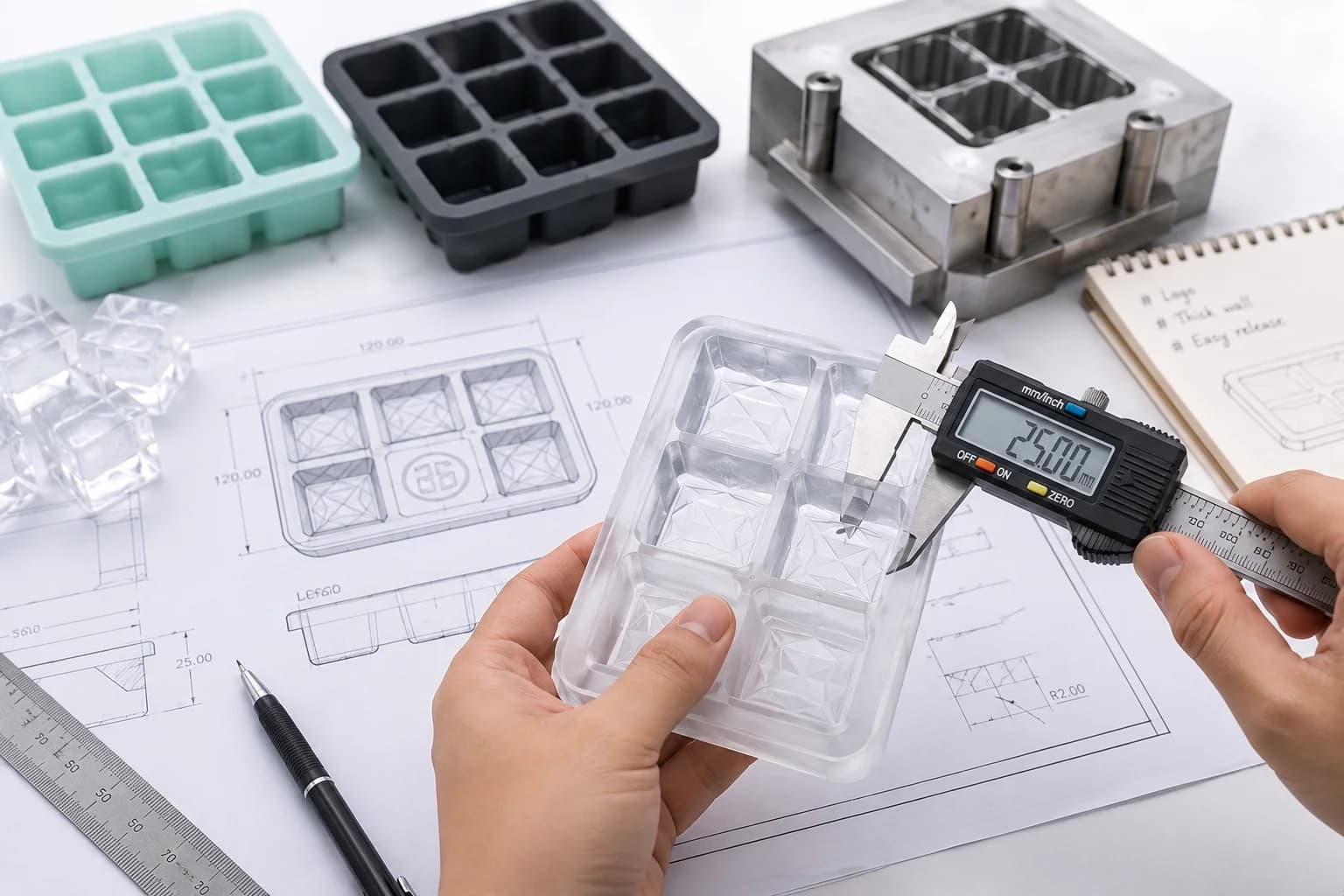
A practical way to plan: total calendar time ≈ your internal approval time + mold lead time + one sample round + production + shipping. If the project has a hard deadline — a trade show, a wedding date, a holiday season — work backwards from the shipment date and treat the internal approval time as the variable you control. More detail on how projects move from design review to production is available in the silicone OEM/ODM manufacturing process overview.
5. MOQ, Sampling, and Cost: What Buyers Should Confirm Before Committing
Core conclusion: the headline MOQ is a starting figure, not a guarantee. The commercially decisive questions are sample eligibility, who pays freight and taxes, and what triggers a change in the final MOQ.
The verified commercial terms for custom silicone work are specific and worth reading carefully:
- Custom-order MOQ: typically 500 pcs, with the final figure varying by design, tooling, packaging, product requirements, and production scheduling [K3].
- Sample policy: free samples may be available; existing-sample availability, freight, taxes, custom-sample charges, and eligibility must be confirmed case by case [K3].
- Mold fee: quoted only after the customer's design files and project requirements have been reviewed [K3].
Three implications follow.
First, a "free sample" is usually a stock sample of an existing product, not a free custom tool. A custom sample that requires new tooling or a new colour match is a different request and carries different costs [K3].
Second, the MOQ is design-sensitive. A simple round cavity and a detailed monogram cavity are not equivalent in tooling effort, and packaging choice can shift the minimum as much as the mold does. Buyers comparing quotes should compare MOQ plus tooling plus packaging, not MOQ alone.
Third, because the mold fee is quoted after design review, arriving with complete files shortens the quoting cycle. Incomplete files do not lower the price; they only delay the number.
The most common commercial mistake in this category is ordering a sample without freezing the specification. If the approved sample is not documented — cavity design, colour reference, mark placement, packaging — mass production has no baseline to match, and inspection becomes a matter of opinion. Verified sourcing guidance recommends a written sample-approval and pre-shipment inspection checklist for exactly this reason [K4]. Buyers who want to align these items before quoting can review the custom-order MOQ and lead-time terms and use them as the agenda for the first supplier call.
6. Key Comparison and Buyer Considerations
The table below summarises how the three project types differ in practice. It is intended as a scoping tool, not a quotation.
| Dimension | Personalized ice mold | Monogram ice mold | Customizable ice cube trays |
|---|---|---|---|
| Primary goal | Buyer-defined shape or size | Mark visible in the ice | Tray format and retail packaging |
| Main design risk | Cavity geometry and release | Mark legibility and orientation | Cavity layout and lid fit |
| Typical MOQ sensitivity | Medium | Higher — tooling depends on mark detail | Varies with packaging format [K3] |
| Sample priority | Shape and dimensions | Mark readability in a real cast | Tray feel, lid fit, packaging appearance |
| Best fit | Bars, events, gifts | Hospitality, brand activations, weddings | Private label and promotional giveaways |
Buyer checklist before tooling:
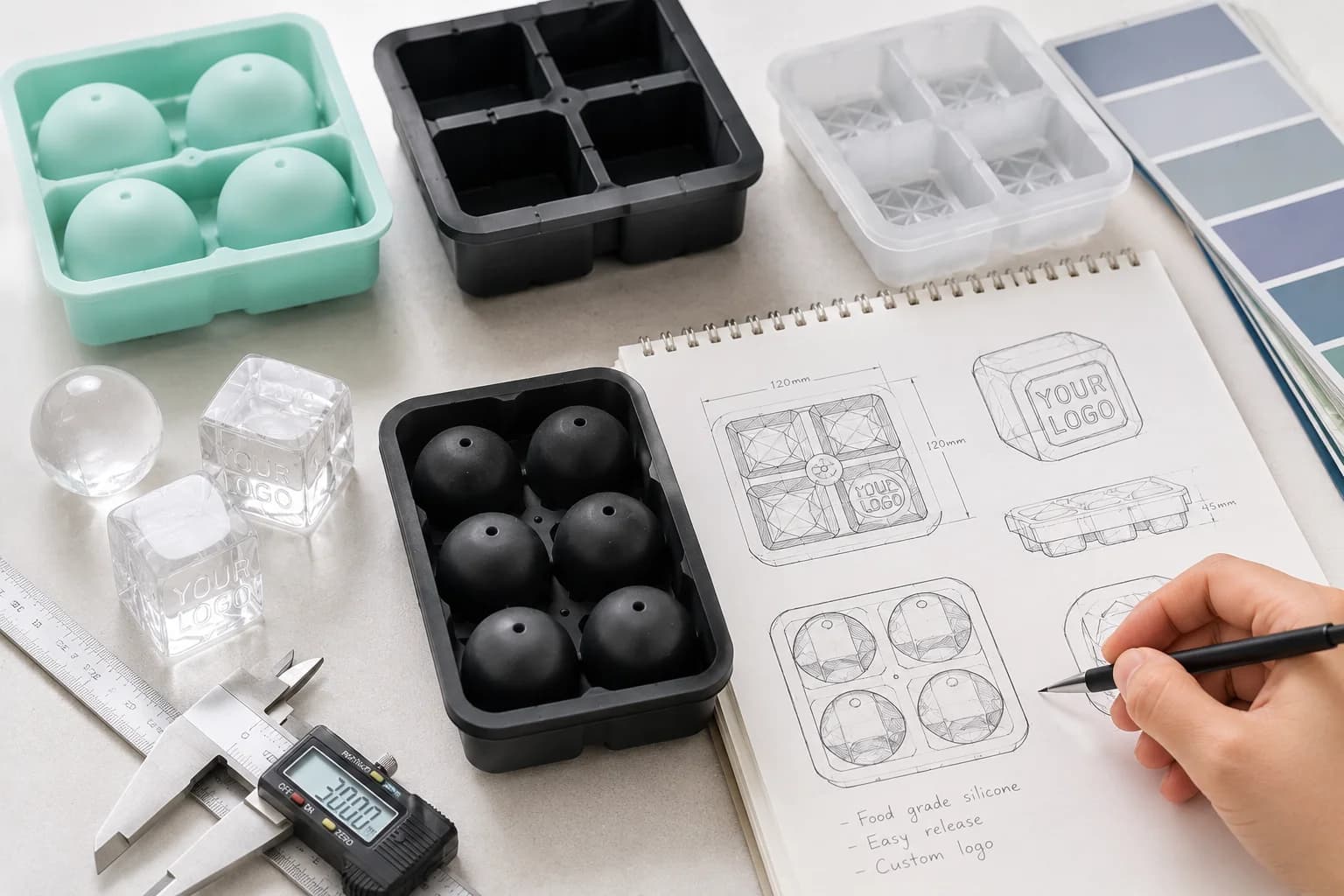
- Written specification covering cavity design, shape, size, colour, mark placement, and packaging [K2].
- Confirmation of the final MOQ for this design, not a generic figure [K3].
- Confirmed sample eligibility, including who pays freight, taxes, and any custom-sample charge [K3].
- Confirmed 3D design before any mold lead-time commitment [K3].
- A documented sample-approval record and a pre-shipment inspection plan [K4].
Two cautions. First, compliance requirements differ by market and should be planned with the supplier in advance; certification claims should not be published unless they are verifiably held, and a supplier that offers a compliance roadmap rather than a document should be treated as a risk [K4]. Second, claim discipline applies to product marketing as well as manufacturing: even a manufacturer's stated ambition to lead in innovation is published as an aspiration rather than a verified market ranking, and product copy should follow the same rule [K5].
7. FAQ
Q1. What is the difference between a personalized ice mold and a monogram ice mold?
A personalized ice mold is any mold made to a buyer's specification — shape, size, colour, or tray format. A monogram ice mold is a specific type of personalized mold in which initials, a name, or a simplified logo are cut into the cavity so the frozen piece carries the mark. Every monogram mold is personalized, but not every personalized mold is a monogram mold.
Q2. What is the typical MOQ for custom monogram ice cube trays?
Custom-order MOQ is typically 500 pcs, but the final figure may vary depending on design, tooling, packaging, product requirements, and production scheduling [K3]. Treat 500 pcs as a planning baseline and ask for a written MOQ against your specific design.
Q3. How long does a custom ice mold project take?
Plan it as a sequence. Mold tooling usually runs about 15 working days after the 3D design is confirmed; a custom sample usually takes 7–10 working days after design and specification confirmation; mass production usually takes 15–20 working days after order and production details are confirmed [K3]. Stock samples are usually available in 1–2 working days, subject to stock and shipping [K3]. Add your own internal approval time on top.
Q4. Can I get a free sample of a monogram ice mold?
Free samples may be available, but existing-sample availability, freight, taxes, custom-sample charges, and eligibility are confirmed case by case [K3]. In practice, a free sample usually means a stock item rather than a newly tooled monogram cavity.
8. Conclusion
Personalized ice molds, monogram ice molds, and customizable ice cube trays are three different projects with three different risk profiles. The monogram version is the most demanding of them, because the product's entire value depends on a mark that must survive freezing, release, and handling — and because that mark is locked in the moment the mold is cut.
The practical sequence for a buyer is straightforward. Define the scope first: is the mark going into the ice, or is the tray the product? Then write the specification across cavity design, shape, size, colour, logo, and packaging [K2]. Confirm MOQ, sample eligibility, mold fee, and lead times against that specific design rather than a catalogue figure [K3]. Approve a physical sample and document it before production begins. Budget your own review time as part of the schedule, not as an interruption to it.
If the delivery date is fixed, start with the date and work backwards through production, sampling, tooling, and design confirmation. That single change in planning order resolves most of the delays buyers experience in this category.