Key Takeaways
- Material grade comes first. Verified food-grade silicone ice molds are odorless and temperature-resistant from -40°C to 240°C (-40°F to 464°F), which covers freezer, refrigerator, and most baking uses [K3].
- Occasion determines format. Standard cube trays suit daily drinks, ice ball trays suit spirits, popsicle molds suit kids and desserts, and ice block molds suit parties and coolers [K5].
- Custom silicone ice molds are a practical option for brands, events, and retailers. Cavity design, product shape, size, color, logo, and packaging can all be customized, but MOQ, tooling, sampling, and lead time must be confirmed before ordering [K1][K2].
- Sourcing is a process, not a purchase. Design-file preparation, sample approval, and pre-shipment inspection are standard steps in custom silicone mold projects [K2].
- A catalog portfolio does not guarantee every item is in stock. Always verify current availability, material composition, dimensions, and certifications before publishing claims or placing volume orders [K4].
1. Introduction
Ice is no longer an afterthought. It is the centerpiece of a craft cocktail, the slow-melting sphere in a glass of whiskey, the branded cube at a corporate event, and the popsicle that keeps children happy on a hot afternoon. As demand for better ice grows, so does the confusion around the simple tool that makes it: the silicone ice mold.
Shoppers often search for a "gadgets tray mold ice mould" without knowing the exact name of what they need. That phrase captures a real problem — the category is fragmented. There are cube trays, sphere molds, popsicle molds, large block molds, and custom-shaped molds. Each has a different purpose, and choosing the wrong one leads to cloudy ice, awkward fit, broken molds, or wasted money.
There is also a deeper concern. Ice absorbs the flavors of whatever it touches. A low-quality mold with a chemical smell can ruin a $60 bottle of whiskey and undermine the trust of customers who order branded drinks at an event. For home users, the stakes are personal; for businesses, they are commercial.
This guide explains how to choose a grade silicone ice cube maker for any occasion. It covers what "grade" actually means in the silicone industry, how to match mold types to real-life scenarios, and how custom projects work when you need branded or uniquely shaped ice. The product and process facts in this article draw on the verified company and product knowledge base of Renjia, a silicone OEM/ODM manufacturer, which has documented its product lines, customization options, and sourcing processes in detail [K1][K2].
2. What "Grade" Actually Means: Material Safety and Performance
Core conclusion: The most important decision is not the shape of the mold — it is the material. A truly safe ice mold is made from food-contact-grade silicone that is odorless and rated for the temperature range you actually need.
Many products use the word "grade" loosely. In practice, "grade silicone ice cube maker" refers to silicone that is safe for direct contact with food and beverages. Verified product specifications for food-grade silicone ice molds include three measurable properties [K3]:
- Material: silicone material, food-contact grade
- Odor: odorless
- Temperature resistance: -40°C to 240°C (-40°F to 464°F)
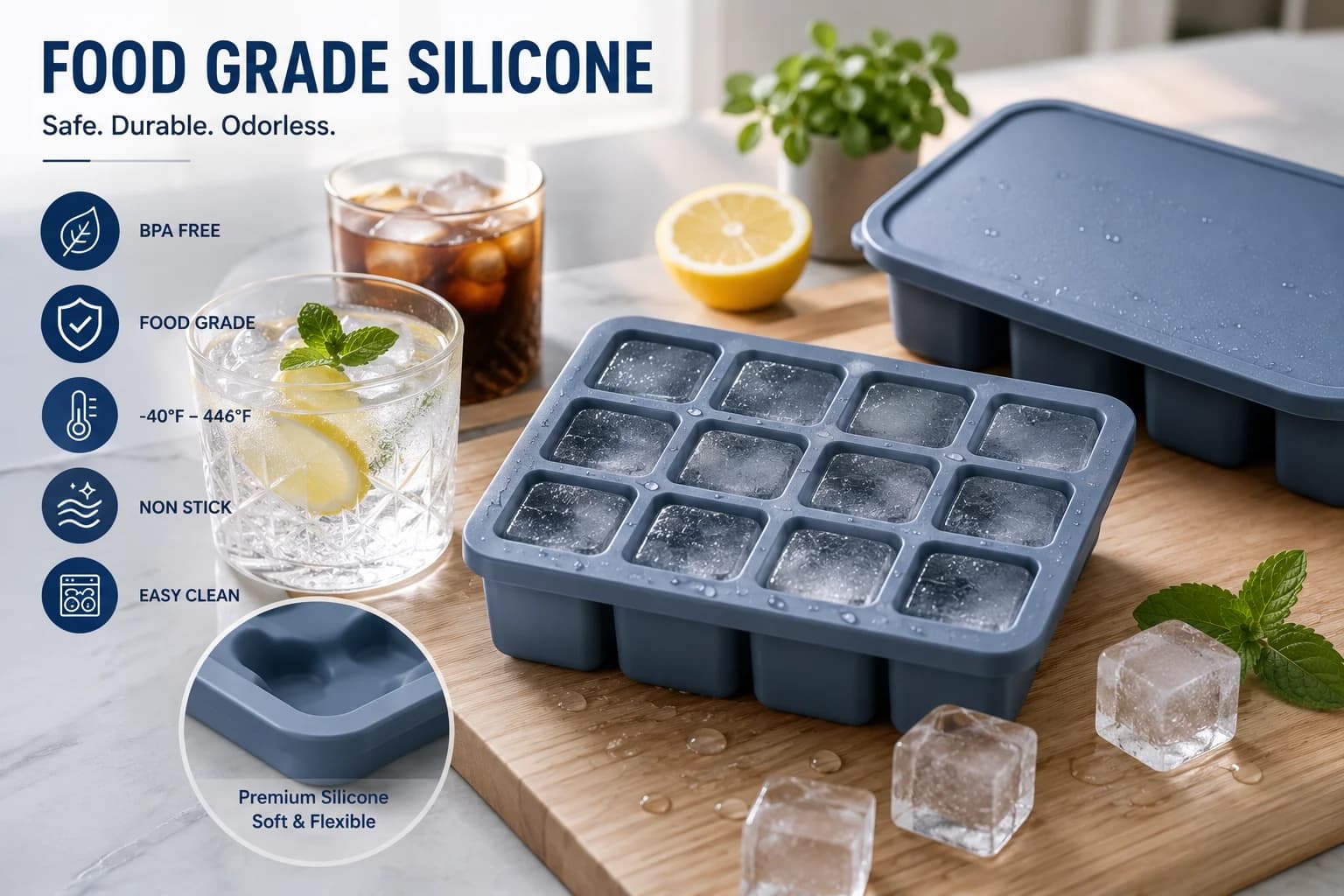
Why does this matter? Ice melts into whatever you are drinking. If a mold contains fillers, has a rubbery smell, or is not designed for food contact, those odors and compounds can migrate into the ice, and from the ice into the drink. The problem is not visible until you take the first sip.
For a related manufacturing reference, review custom silicone ice mold manufacturing.
For home users, there are three practical checks you can do before buying:
- Unfold and sniff. A food-grade mold should have no detectable rubber or plastic odor at room temperature.
- Twist and stretch it. Low-quality molds often contain fillers that make the silicone feel stiff, chalky, or prone to tearing. Good food-grade silicone should bounce back.
- Check the temperature rating. If the mold is rated only for refrigeration, do not use it for hot liquids or baking. A verified range of -40°C to 240°C gives you flexibility for both freezing and oven-safe applications [K3].
There is an important boundary to keep in mind. A manufacturer's portfolio is evidence of what the company can produce, not proof that every listed item is currently stocked or available for every market [K4]. Before making a purchase decision — especially a bulk one — you should ask the supplier to confirm the product-specific specifications, including material composition, dimensions, and any relevant certifications [K4].
3. Match the Mold to the Occasion
Core conclusion: Once the material is confirmed, the next decision is geometry. The right mold depends entirely on how and where the ice will be used.
The silicone mold category spans several distinct formats, and the reference product portfolio maps them across household, kitchen, and promotional use cases [K5]. The portfolio rules explicitly allow ice molds to be tagged under household, kitchen, and promotional categories, which means a single product line can serve very different audiences [K4].
Here is a practical guide to the most common formats, based on the documented product map [K5]:
| Mold Type | Best Use Case | What to Consider |
|---|---|---|
| Ice cube trays | Daily drinks, iced coffee, lunch boxes | Standard size that fits most cups and bottle openings |
| Ice ball trays | Whiskey, spirits, slow-melting drinks | Spheres melt slower than cubes and chill without diluting quickly |
| Popsicle molds | Kids, desserts, summer snacks | Needs a stable base and easy-release design for small hands |
| Ice block molds | Parties, coolers, large-format drinks | Large blocks suit punch bowls and portable coolers |
| Custom-shaped molds | Brand events, promotions, gifts | Requires custom cavity design and logo planning [K1] |
Scenario-based advice helps make this concrete. A home bartender hosting a whiskey tasting should choose sphere molds, because large spheres minimize surface area and slow dilution. A parent preparing summer snacks should look for popsicle molds, which are also documented within the promotional product line [K5]. A café or bar that wants to serve signature iced drinks should consider large cube or block molds for slow-melting ice. And a brand planning a summer launch event might need custom logo ice cubes — a project that belongs in the custom silicone ice mold category [K1].
When a shopper searches for a "gadgets tray mold ice mould" with no format in mind, they usually end up with a generic cube tray. That is fine for basic use, but it is rarely the right choice for spirits, parties, kids, or branded events. Identify the occasion first, then choose the mold type that fits it.
For additional context on this decision, see Food-Grade Silicone Ice Cube Trays: What B2B Buyers Should Verify.
4. Custom Silicone Ice Molds: From Design File to Finished Product
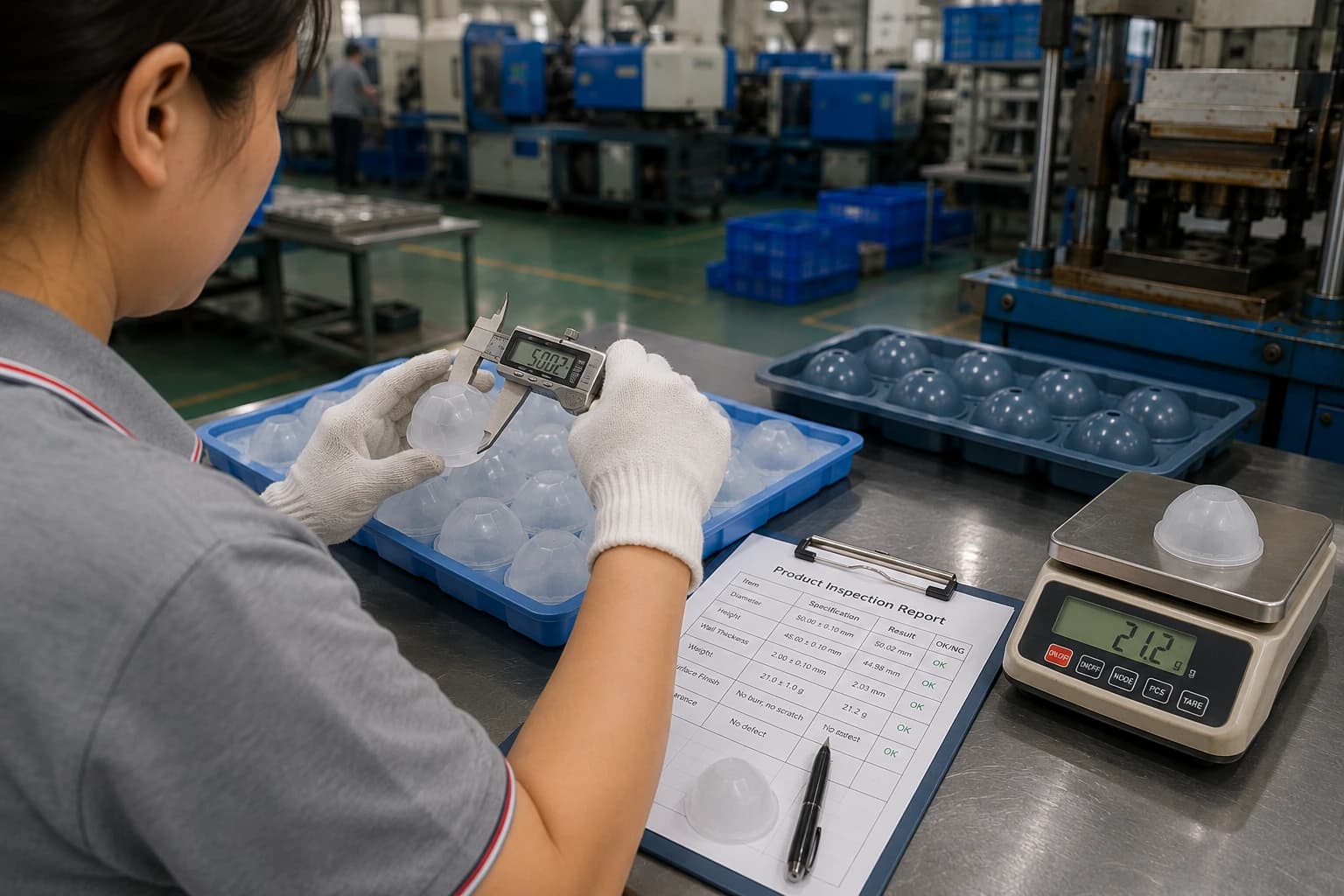
Core conclusion: If you need ice that carries a logo, fits a specific glass, or serves a promotional campaign, custom silicone ice molds are a realistic option — but they require a structured sourcing process, not just a catalog order.
According to verified product documentation, the typical customization scope for custom silicone ice molds includes cavity design, product shape, size, color, logo, and packaging [K1]. That gives a brand almost complete control over the final product. The same knowledge base confirms that the content topics supported include sourcing guidance, project workflows, MOQ and tooling planning, sample approval, and pre-shipment inspection [K2].
The process for a custom project generally follows this sequence [K2]:
- Design review. Prepare your design files and share the intended shape, size, and any logo or artwork requirements with the manufacturer.
- Tooling. The manufacturer creates the mold tooling that shapes the silicone. Confirm tooling costs and ownership before production begins.
- Sampling. Review physical samples before approving mass production. This is your last chance to correct shape, size, or logo placement.
- Production. Once samples are approved, the manufacturer runs the order.
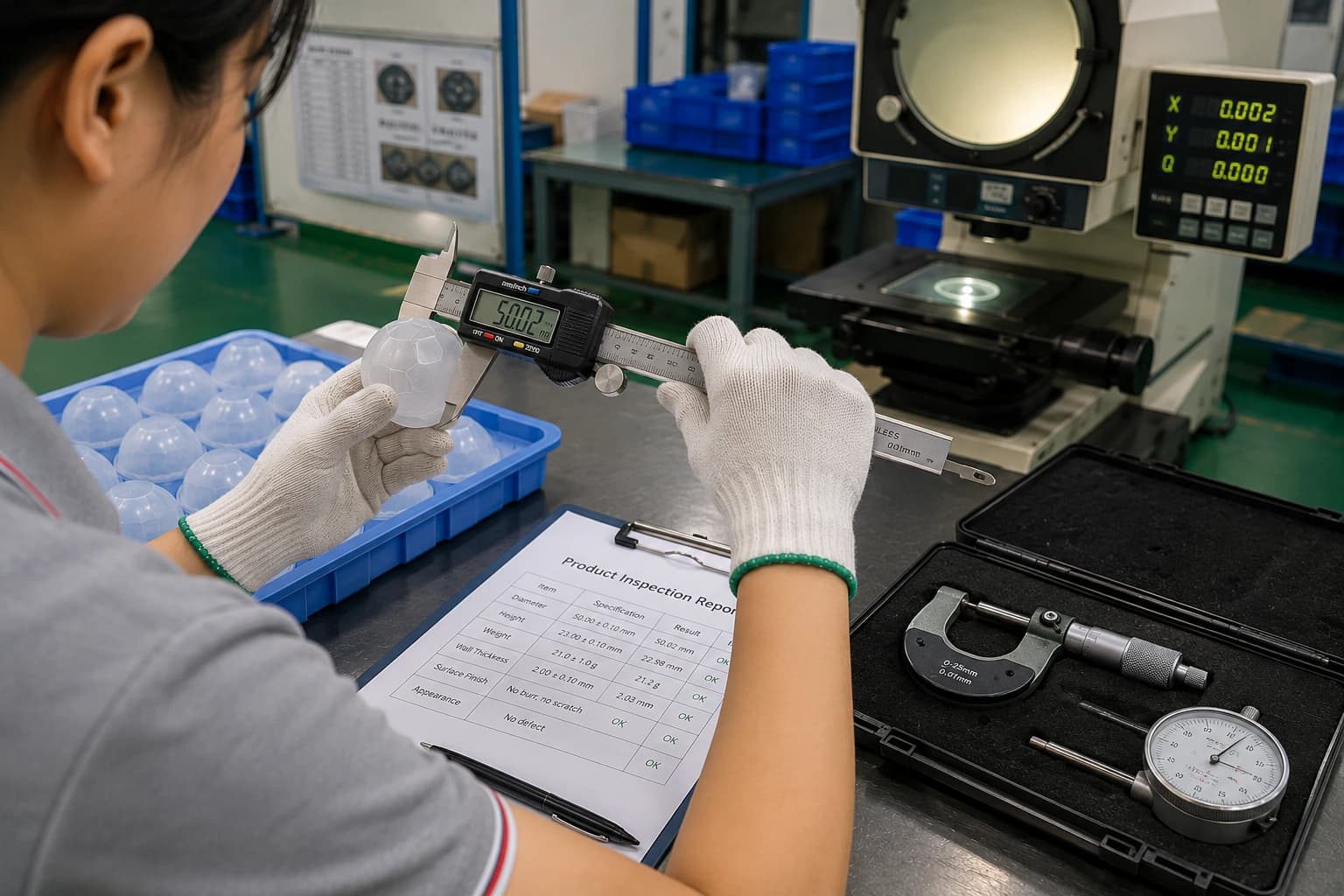
- Inspection. Pre-shipment inspection verifies that the finished goods match the approved samples.
For buyers, the practical checklist is short but critical [K2]:
- Confirm the MOQ. Minimum order quantities vary by project and must be clarified early.
- Ask about tooling and sampling. Who pays for the tool, and how many sampling rounds are included?
- Plan the lead time. Custom projects take longer than stock orders because design review, tooling, and sampling all add time.
- Use a sample-approval checklist. Verify color, dimensions, flexibility, and logo quality against your design files.
- Arrange pre-shipment inspection. This protects you from receiving products that do not match the approved sample.
A common scenario: a coffee chain wants branded ice cubes that match its logo for a summer drinks campaign. It needs custom cavity design to create the logo shape, custom color to match the brand palette, and custom packaging for retail or event distribution [K1]. Instead of searching for an off-the-shelf "gadgets tray mold ice mould" product, that chain should contact a silicone OEM/ODM manufacturer, submit design files, and walk through the sampling and tooling process.
One caution from the knowledge base applies to every custom project: market-specific compliance planning should be handled without unsupported certification claims [K2]. Ask the manufacturer what compliance documentation they can actually provide for your target market, and verify it against your own requirements.
Before finalizing the specification, use Top Features to Look for in a Premium Ice Tray Maker for Home Use as an additional planning reference.
5. Key Comparison: Standard Retail Mold vs. Custom OEM Mold
| Criterion | Standard Retail Mold | Custom OEM Mold |
|---|---|---|
| Design control | Fixed by the brand that sells it | Cavity, shape, size, color, logo, packaging are customizable [K1] |
| Order size | Single unit, low commitment | MOQ applies; confirm before ordering [K2] |
| Lead time | Immediate | Design review, tooling, sampling, and production add time [K2] |
| Unit cost | Low | Higher per unit, but decreases with volume |
| Quality assurance | Limited to product listing claims | Sample approval and pre-shipment inspection are available [K2] |
| Best for | Home use, gifts, casual entertaining | Branded ice, events, retail private label, promotional campaigns |
The choice depends on your goal. If you need a mold for your own kitchen, a standard retail product is usually sufficient — provided it is food-grade, odorless, and rated for the temperature range you need [K3]. If you need dozens or hundreds of molds with your logo, or if you plan to sell molds under your own brand, the custom OEM route is the correct path, and it should be treated as a project with defined milestones [K2].
6. FAQ
Q1. Is a silicone ice cube maker safe for food and drinks?
Yes, if it is made from food-contact-grade silicone. Verified food-grade silicone ice molds are odorless and rated for temperatures from -40°C to 240°C (-40°F to 464°F) [K3]. You should confirm the product-specific material specification with the manufacturer before buying, especially for bulk or commercial use [K4].
Q2. Can silicone ice molds be used for hot liquids or baking?
Many can, because the verified temperature range reaches 240°C (464°F) [K3]. However, you should always check the specific rating for the product you are buying. A mold designed only for refrigeration should not be exposed to high heat. When ordering custom molds, ask the manufacturer to confirm the product-specific temperature rating [K4].
Q3. What can be customized in a custom silicone ice mold project?
The documented customization scope includes cavity design, product shape, size, color, logo, and packaging [K1]. A typical project moves through design review, tooling, sampling, production, and pre-shipment inspection [K2]. You should confirm MOQ, tooling costs, and lead time with the manufacturer before starting.
Q4. What should I ask a manufacturer before ordering custom ice molds?
Ask about minimum order quantity, tooling costs and ownership, sampling rounds, lead time, sample-approval procedures, and pre-shipment inspection [K2]. Also request confirmation of current availability and product-specific material specifications, because a portfolio listing does not guarantee that every item is stocked [K4].
7. Conclusion
Choosing a grade silicone ice cube maker starts with material, not shape. A verified food-grade silicone mold that is odorless and rated from -40°C to 240°C gives you a safe foundation for any use [K3]. From there, match the mold type to the occasion: cube trays for daily drinks, sphere molds for spirits, popsicle molds for kids, block molds for parties, and custom molds for branded or promotional needs [K5].
For home users, the practical next step is simple: buy from a source that can confirm the food-grade specification, and run a quick odor and flexibility check when the product arrives. For businesses and brands, the next step is to treat the project as a sourcing process — prepare design files, confirm MOQ and tooling costs, request samples, and arrange pre-shipment inspection before mass production [K2].
The market is full of options, from a generic gadgets tray to a fully custom mold with your logo on every cube. The difference between a disappointing purchase and a reliable product is not luck. It is knowing what to verify, whom to ask, and when to move from browsing to sourcing [K1][K2][K4].