Key Takeaways
- Judge a premium ice tray maker by material transparency, food-contact grade, temperature resistance, and release performance — not just appearance.
- Silicone large ice cube trays are the most practical home choice because food-grade silicone is odorless, flexible, and tolerant of both freezer and dishwasher temperatures. [K5]
- A true "large cube" tray should have cavities around 2 inches or larger, but its total footprint must fit your freezer shelves and drawers.
- For branded or custom trays, confirm design-file requirements, tooling, sampling, MOQ, and lead time with the manufacturer before approving production. [K1][K2]
- Treat "food-grade silicone" as a claim to verify — check material composition, certifications, and current availability — rather than a label to trust blindly. [K4]
1. Introduction
Ice used to be an afterthought: fill the tray, freeze, crack out cubes. But home drinking habits have changed. Whiskey drinkers want one large cube that melts slowly. Cold brew and iced coffee lovers want ice that does not water down the drink by midday. Families want ice trays that do not absorb odors from the freezer. And hosts want ice that looks as polished as the cocktails it chills.
The problem is that most ice trays on the market were never designed for these jobs. Thin plastic trays crack under repeated temperature stress, stain easily, and are awkward to clean. Even some silicone trays are made from blends or composites that perform inconsistently. At the same time, words like "premium" and "food-safe" are used loosely, which makes it hard for a normal buyer to separate genuine quality from packaging. [K4]
This article offers a practical framework for choosing a premium ice tray maker for home use. It focuses on the features that actually affect performance: verified silicone material and temperature tolerance, thoughtful large-cube cavity design, daily usability and cleaning, and — if you are sourcing custom or branded trays — the manufacturing process behind them. By the end, you will know exactly what to inspect, test, and ask before you buy.
2. Food-Grade Silicone and Temperature Resistance: The Non-Negotiable Foundation
Core conclusion: a premium ice tray starts with food-grade, odorless silicone that can survive both the freezer and the dishwasher without cracking, warping, or transferring taste.
Silicone became the default material for quality ice trays because it combines flexibility with a very wide temperature tolerance. Publicly verified specifications from Renjia, an established silicone OEM/ODM manufacturer, list the material as food-contact-grade silicone, odorless, with a temperature resistance of -40°C to 240°C (-40°F to 464°F). [K5] For context, a typical home freezer operates around -18°C (0°F), a dishwasher hot cycle runs near 75°C (167°F), and boiling water reaches 100°C (212°F). A tray rated from -40°C to 240°C therefore covers every normal kitchen scenario with a wide safety margin. [K5]
Why is "odorless" such an important spec? Ice is essentially frozen water, and water absorbs ambient smells easily. A tray made from low-grade silicone or rubber compounds can transfer a plastic-like or rubbery note to the ice, which then ends up in your drink. An odorless, food-contact-grade material avoids that failure mode from the start. [K5]
The practical caveat is that not everything labeled "silicone" is pure silicone. Some products marketed as silicone mats or molds use composite or mixed materials, and those may behave differently in low or high temperatures. [K4] Before you buy, look for a specification that states the material composition, not just the word "silicone" on the package.
For a related manufacturing reference, review custom silicone ice mold manufacturing.
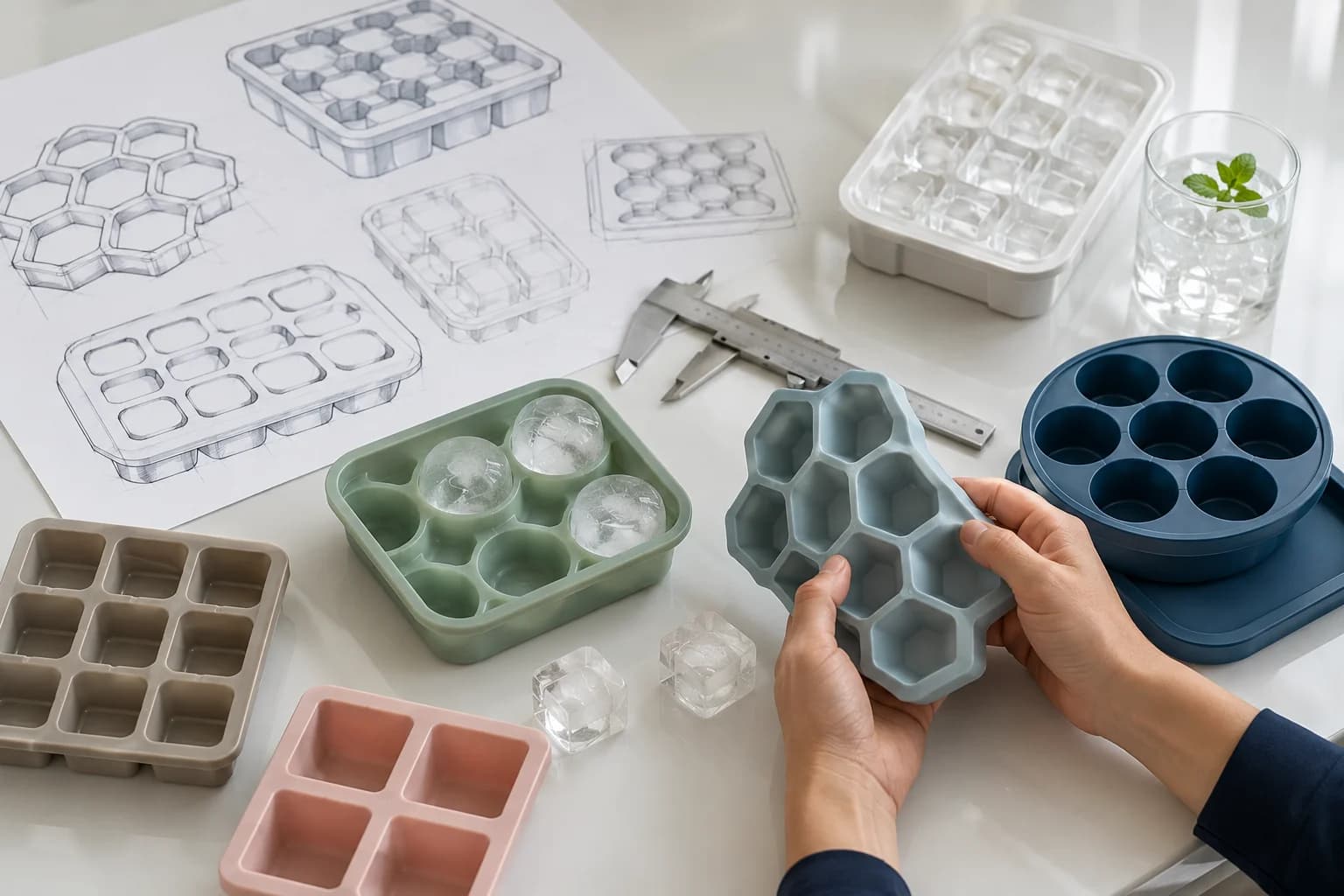
Scenario-based advice: If you make ice daily — for drinking water, iced coffee, smoothies, or children's drinks — prioritize verified food-contact grade over price or aesthetics. A tray that fails the odor test will ruin every drink it touches, and no amount of clever design can compensate for that.
3. Large-Cube Cavity Design: Size, Shape, and Freezer Fit
Core conclusion: the cavity design is what makes a tray genuinely "large-cube." Size, shape, opening width, and spacing between cavities determine melt rate, release ease, and how many trays actually fit in your freezer.
Large ice cubes are popular for a simple reason: less surface area relative to volume means they melt more slowly and dilute drinks less. A whiskey lover can enjoy a drink for twenty minutes without it turning watery. But "large" is not a regulated term, so you need to check the actual cavity dimensions. Premium trays typically offer cubes around 2 inches (5 cm) across, or spherical molds around 2 to 2.5 inches for a slower-melting ball format.
What separates a well-designed tray from a mediocre one:
- Cavity depth and opening width. A wide top opening makes filling, emptying, and cleaning easier. Deep, narrow cavities are harder to release and more likely to tear.
- Spacing between cavities. If cavities are too close together, the tray may freeze into a stiff block that is difficult to flex. Generous spacing allows each cube to expand and release independently.
- Tapered or rounded walls. Slight tapering lets the cube slide out cleanly. Sharp internal corners create weak points where ice can crack or stick.
- Lid or stackable design. A fitted lid protects ice from absorbing freezer odors and allows trays to be stacked, which matters if you freeze large batches for a party.
- Total footprint. A tray with enormous cubes is useless if it does not fit your freezer drawer, shelf depth, or the space between the shelves.
For manufacturers, cavity design is one of the most customizable aspects of a silicone ice mold. A verified manufacturer's knowledge base lists cavity design, product shape, size, color, logo, and packaging as typical customization points for custom silicone ice molds. [K1] This means that if a standard large-cube tray does not exist for your freezer layout, a custom mold can be developed around your dimensions.
Scenario-based advice: Measure your freezer before you buy. Note the shelf height and drawer depth in inches. A tray that holds twelve 2-inch cubes sounds great, but if it is 1 inch taller than your ice drawer, you will be bending or cracking it every time you close the door.
4. Release, Cleaning, and Everyday Durability
Core conclusion: the daily experience of a premium ice tray — how easily cubes pop out and how quickly the tray cleans up — is where it earns its higher price.
A cheap plastic tray often requires twisting, pounding, or running warm water over the bottom just to free a few cubes. A well-made silicone tray, by contrast, flexes from the sides, and the cubes release individually with a gentle push. This is not a small convenience; it is the difference between making ice a chore and making it a habit.
Temperature resistance also defines how long the tray lasts. Because premium silicone tolerates the full freezer-to-dishwasher range, you can clean it in the dishwasher, sanitize it with hot water, and even use it as a mold for frozen treats or chilled desserts without worrying about degradation. [K5] The odorless property carries a maintenance benefit too: silicone that does not absorb smells will not carry yesterday's garlic bread flavor into tomorrow's ice cubes. [K5]
For additional context on this decision, see Easy-Release Silicone Ice Cube Trays: How Mold Design Affects Performance.

When evaluating a tray, do a simple mental test:
- Flexibility. The tray should bend easily along its length without cracking or showing white stress marks.
- Rim structure. A reinforced rim keeps the tray stable when you carry it full of water to the freezer.
- Edge thickness. Thicker edges and walls resist tearing over hundreds of freeze-and-release cycles.
- Consistent material. Be cautious of products that avoid stating whether they are pure silicone or a composite. As one verified manufacturer's portfolio guidance notes, some products in the silicone category may use composite or non-silicone materials, so material claims should be confirmed product by product. [K4]
Scenario-based advice: If you plan to use the tray every day, choose one that is dishwasher-safe and flexible enough to release a full batch in under a minute. If you only make ice for weekend gatherings, a larger, stiffer tray may be acceptable — but you will still want one that releases without tools.
5. Customization and OEM/ODM Sourcing: When You Want More Than a Stock Tray
Core conclusion: if you want branded ice, unusual shapes, or a specific size that retail trays do not offer, the right path is working with a silicone OEM/ODM manufacturer — but the process requires a different set of decisions than buying a shelf product.
Custom silicone ice molds are a well-established product category. Verified manufacturer knowledge describes the typical scope of customization as cavity design, product shape, size, color, logo, and packaging, supported by services such as design-file preparation, tooling, sampling, and quality inspection. [K1] This matters for several audiences:
- Bars and coffee shops that want logo ice cubes for signature drinks.
- Event planners and gift brands that want shaped ice for parties, weddings, or promotional kits.
- Home users who cannot find a large-cube tray that fits their freezer and are willing to order a custom size.
The knowledge base for this category also clarifies an important boundary: a manufacturer's product portfolio map is evidence of its reported capabilities, not proof that every item is currently stocked, available in every market, or certified for every use. [K4] A responsible sourcing conversation must therefore confirm four things before any commitment:
- Current availability — is the product active, or was it only in a portfolio diagram?
- Material composition and dimensions — what exactly is being made, and from what?
- Certifications — which food-contact or market-specific compliance documents are current, and for which regions?
- MOQ, tooling, sampling, and lead time — what does it cost and how long does it take? [K4]
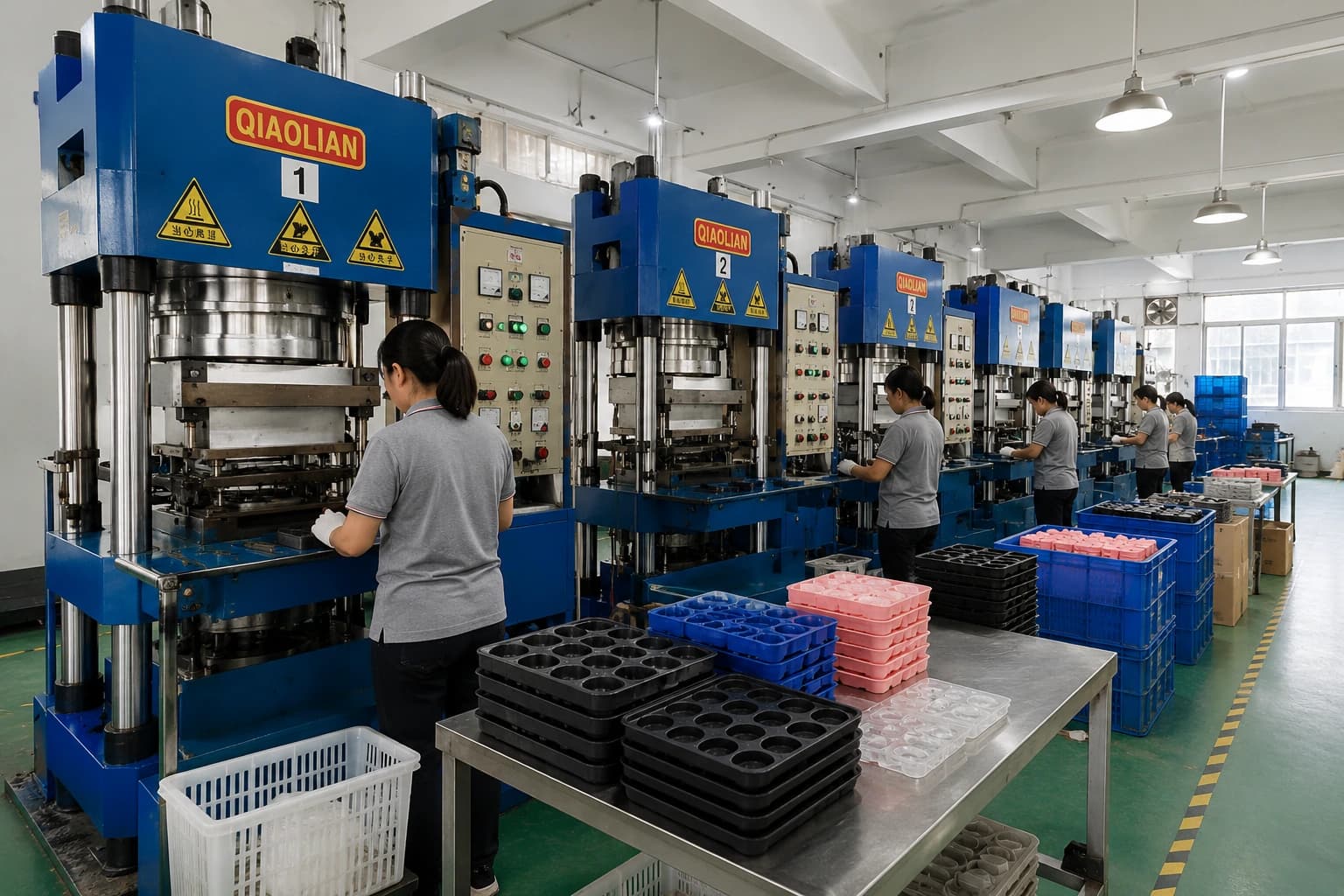
A typical custom mold project follows a consistent sequence: prepare the design file, review cavity design and dimensions with the manufacturer, create tooling, produce samples, approve the sample, run production, and finish with packaging and inspection. [K1][K2] Buyers should also expect to ask sourcing questions around MOQ and tooling costs before sampling begins, because those decisions set the economics of the whole project. [K2]
Scenario-based advice: Start with a complete design file — dimensions, cavity count, wall thickness, and desired durometer — and request a sample before approving bulk production. If the manufacturer cannot answer the four confirmation points above, treat that as a warning sign.
Before finalizing the specification, use Comparing Silicone Large Ice Cube Trays for Durability and Ease of Release as an additional planning reference.
6. Key Comparison: Stock Premium Tray vs. Custom Silicone Large Ice Cube Trays
| Decision factor | Stock premium tray | Custom silicone large ice cube trays |
|---|---|---|
| Design control | Fixed by manufacturer | Full control over cavity design, shape, size, color, and logo [K1] |
| Time to get it | Immediate purchase | Weeks to months depending on tooling, sampling, and production [K2] |
| Minimum quantity | 1 unit | MOQ applies; confirm the exact number with the manufacturer [K2][K4] |
| Upfront cost | Low, retail price only | Tooling and sampling costs may apply before production [K2] |
| Certification verification | Based on published specs | Must be confirmed per product and per market [K4] |
| Best for | Home users who need one or two reliable trays | Bars, brands, or anyone needing a unique size or branded ice |
7. FAQ
Q1. What temperature range should a premium silicone ice tray handle?
A publicly verified specification from a silicone OEM/ODM manufacturer lists food-grade silicone with a temperature resistance of -40°C to 240°C (-40°F to 464°F). [K5] This comfortably covers home freezers (about -18°C), dishwasher cycles, and hot-water sanitizing, so it is a sensible benchmark when comparing products.
Q2. Are silicone large ice cube trays safe for food and drinks?
Quality silicone large ice cube trays are made from food-contact-grade, odorless silicone, which is suitable for making ice that goes into drinks. [K5] However, the word "silicone" alone is not a safety guarantee. Check the product specification for material composition and current food-contact certifications, since some products in the silicone category may use composite or non-silicone materials. [K4]
Q3. Can I order custom silicone large ice cube trays with my logo?
Yes. Custom silicone ice molds can be customized in cavity design, product shape, size, color, logo, and packaging. [K1] Plan a typical process of design-file preparation, tooling, sampling, sample approval, and production, and confirm MOQ and lead time with the manufacturer before starting. [K1][K2]
Q4. Do large ice cubes actually keep drinks colder longer than regular cubes?
Large cubes melt more slowly than small cubes because they have less surface area relative to their volume, which means slower dilution. That is why they are preferred for whiskey, cocktails, and iced coffee. The trade-off is freezer space: a premium large-cube tray takes up more room, so measure your freezer before committing.
8. Conclusion
A premium ice tray maker is not defined by a fancy brand name or a trendy color. The real benchmarks are concrete and verifiable: food-contact-grade silicone, a wide confirmed temperature range, odorless material, a cavity design that deserves the word "large," easy release, dishwasher-safe cleaning, and — if you are sourcing custom trays — a transparent manufacturing process covering design, tooling, sampling, MOQ, and lead time. [K1][K2][K5]
If you are buying for your own kitchen, start with the verification checklist in Section 6 and measure your freezer before ordering. If you need branded or custom-shaped ice, approach it as a sourcing project: prepare your design file, ask the right questions, and approve a sample before committing to production. [K1][K2]
In both cases, the same principle applies: trust verified specifications over marketing language, and confirm what you cannot see on the package. [K4][K5]