Key Takeaways
- A ball-shaped ice cube is not just a visual upgrade: its lower surface-area-to-volume ratio generally slows melt and reduces dilution in whiskey, cocktails, iced coffee, and other cold drinks.
- The “best” ball ice cube tray depends on cavity size, lid seal, silicone flexibility, release ease, freezer space, and how much ice you need per day—not on shape alone.
- For home users, a flexible food-grade silicone mold with a snug lid and 2.0–2.5 inch cavities is a practical starting point; for bars and B2B buyers, sampling, tooling, packaging, and quality inspection matter as much as the design.
- Renjia’s reviewed product architecture lists ice ball trays alongside ice cube trays, popsicle molds, and soap molds in its household and promotional lines, and its custom silicone ice mold program covers cavity design, shape, size, color, logo, and packaging [K1][K2].
- Treat “best” as use-case specific: the right ice ball maker mold for a home whiskey drinker is not automatically the right mold for a cocktail bar, a gift set, or a private-label retail program.
1. Introduction
An old-fashioned ice cube has a simple job: make a drink cold. But in a whiskey glass, a stirred cocktail, or a glass of iced coffee, that job is not so simple. Small, cloudy cubes melt quickly, release more water, and can dull the flavor of a drink before the last sip. They also look ordinary. That is why many drinkers and buyers are moving from traditional cube trays to a ball ice cube tray, and why the search for a reliable ice ball maker mold has become more specific.
The appeal is easy to understand. A large sphere looks deliberate. It rolls in the glass. It melts more slowly in many serving situations because it exposes less surface area relative to its volume. And it gives bartenders and home hosts a simple way to make a drink feel more considered without adding a new appliance.
But the category is not uniform. Silicone ball molds differ in cavity size, wall thickness, lid design, release behavior, and food-contact documentation. Some produce neat spheres but are difficult to fill. Some are easy to demold but crack after repeated freezing. Some look good in product photos but do not stack well in a busy bar freezer. For B2B buyers, the challenges shift from “Will this work in my kitchen?” to “Can this design be sampled, tooled, packed, and inspected consistently?”
This article explains how ball ice changes a drink, what actually makes a ball ice tray work, how to choose the right format for home or commercial use, and what buyers should prepare before requesting a custom ice ball maker mold project. It does not promise a universal “best” tray. It gives you a practical way to identify the best tray for your glassware, volume, freezer, and sourcing plan.
2. Why Ball Ice Changes the Drink: Surface Area, Melt Rate, and Presentation
Core conclusion: Ball ice improves the drinking experience mainly because it changes melt dynamics and presentation, not because a sphere is inherently premium.
A sphere has the smallest surface area for a given volume. In practice, that means a large ball of ice generally melts more slowly than a cluster of small cubes or a thin crescent. Slower melt is useful in drinks where dilution is part of the recipe but should be controlled: an Old Fashioned, a Negroni, a rum and soda, or a cold brew. The drink stays cold, but the ice does not flood it with water as quickly.
Presentation matters too. A clear or near-clear sphere in a rocks glass signals care. It creates a focal point. It also changes how the drink feels in the hand: a large sphere moves less violently than small cubes, so the drink swirls rather than sloshes. For hospitality operators, that visual cue can support a higher perceived value for a simple serve.
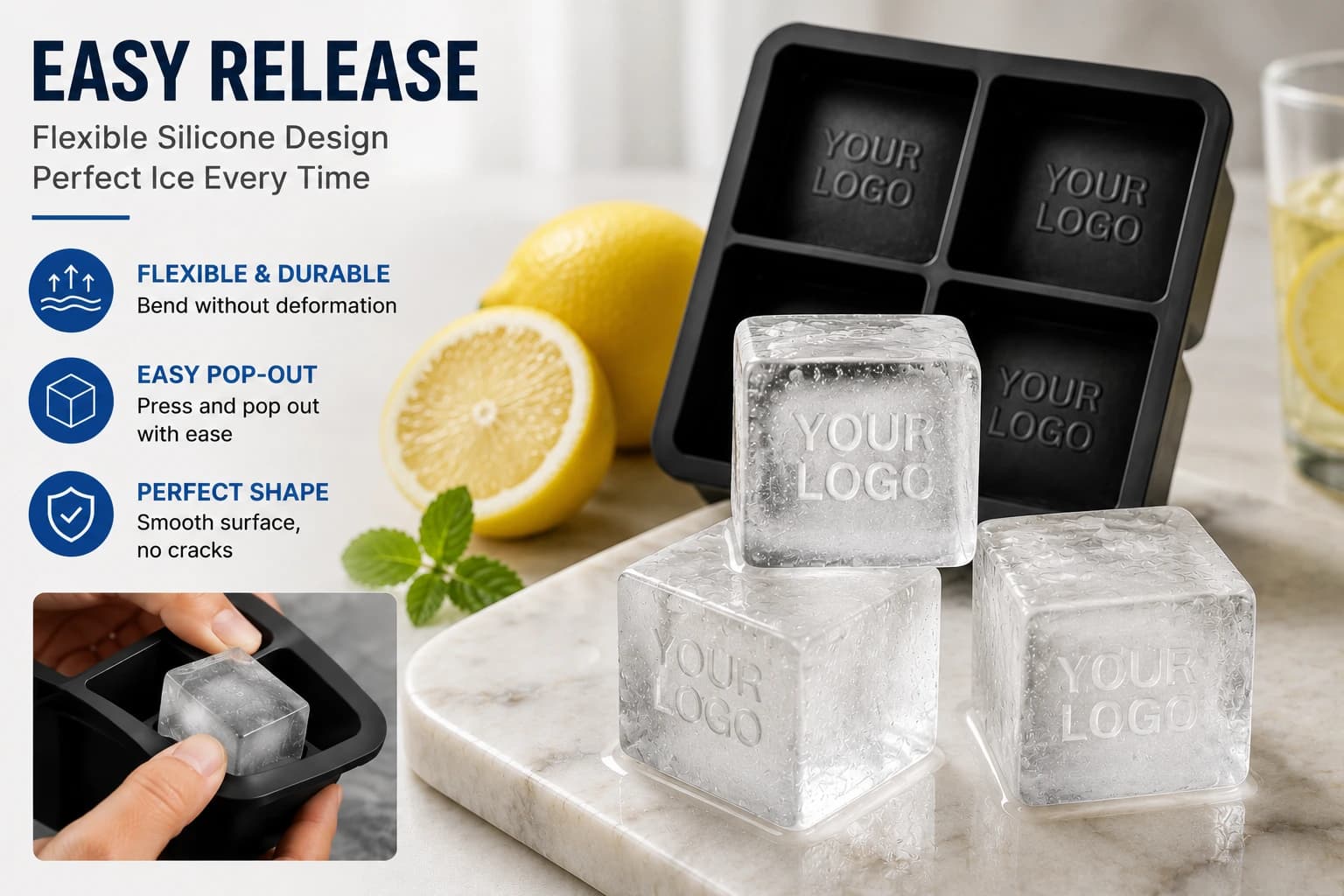
There are limits. Ball ice does not fix a warm glass, a warm mixer, or an oversized pour. A sphere can also be awkward in narrow highballs or small coupe glasses. If the ball does not fit, it is the wrong format, no matter how good the mold is. For home users, the practical move is to measure the internal width of your most-used rocks glasses before buying. For buyers, the practical move is to define the target drink and glassware before choosing a cavity size.
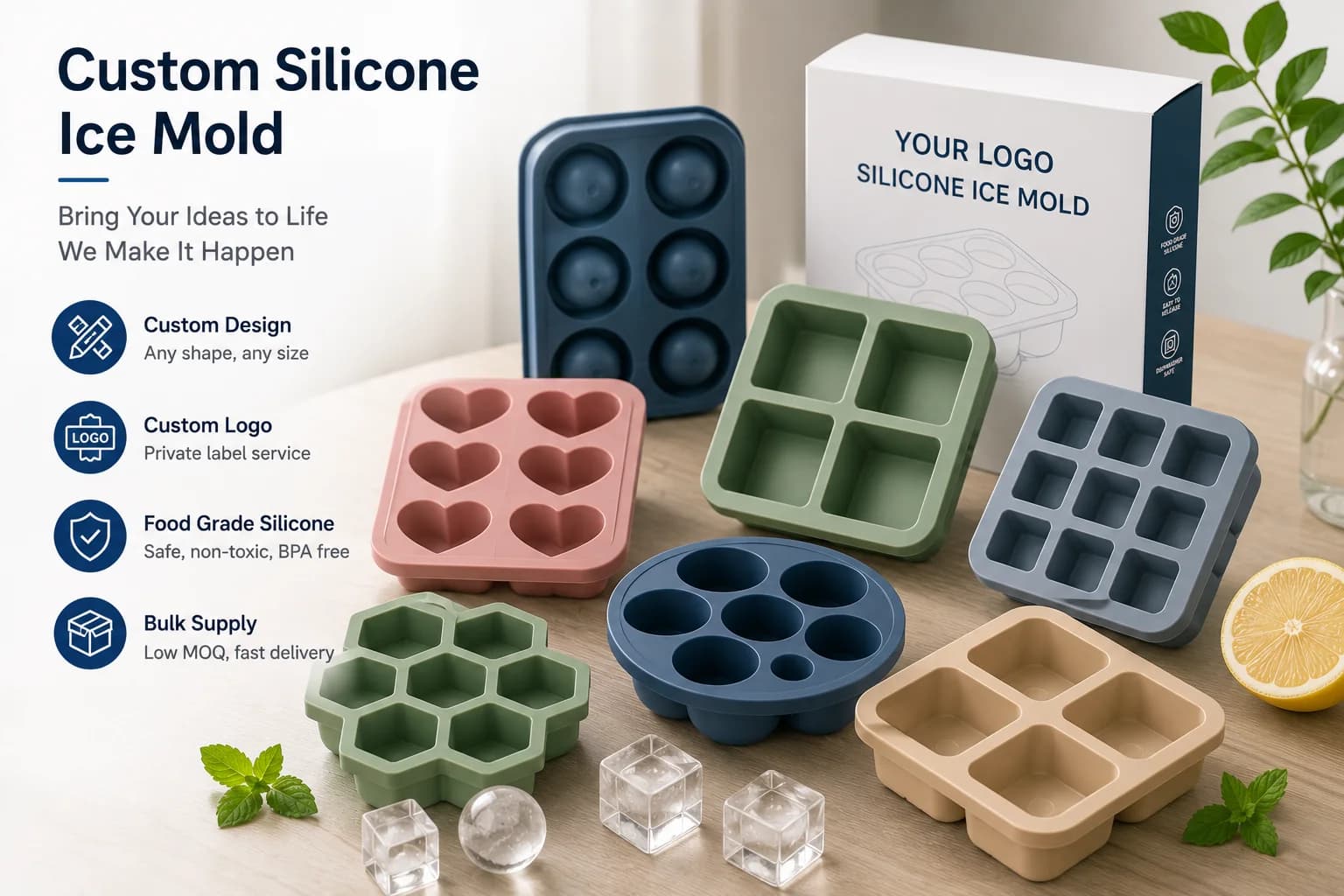
The upgrade path is also broader than a single sphere. Some buyers want a classic ball; others want a cube with rounded edges, a branded imprint, or a cavity that fits a specific gift set. Renjia’s reviewed custom silicone ice mold program covers cavity design, product shape, size, color, logo, and packaging, which means the discussion can start with the drink experience rather than a stock SKU [K2]. For a buyer exploring that route, the useful question is not “Which ball mold is best?” but “What cavity geometry, release behavior, and packaging will make this product work for my channel?”
3. What Actually Makes an Ice Ball Maker Mold Work
Core conclusion: A good ice ball maker mold is an engineered tool. Cavity geometry, lid seal, silicone flexibility, fill line, and release method matter more than the word “ball” on the package.
The first variable is cavity geometry. A true sphere needs a mold that closes evenly and holds its shape while water expands during freezing. If the two halves do not align, you get a seam, a flat spot, or a leak. If the cavity is too large for the freezer, the mold becomes impractical. If it is too small, the ball melts too quickly to justify the format. A useful starting point for home rocks glasses is a cavity around 2.0–2.5 inches, but the right size depends on the glass and the drink.
The second variable is the lid. A snug lid reduces spills during filling and helps the mold hold its shape. It also limits freezer odors and prevents the water surface from forming a uneven cap. A lid that is too loose is worse than no lid because it gives a false sense of security. A lid that is too tight can be difficult to remove when frozen. The best design is usually one that seats firmly but has a small tab or edge for lifting.
The third variable is material behavior. Flexible food-grade silicone makes demolding easier: you can push the sphere out without cracking it. Rigid plastic molds can produce very round shapes, but they may be harder to release and more likely to crack if dropped or twisted. Silicone also tolerates repeated freezing and washing well, provided the mold is properly specified and cared for. For B2B buyers, material documentation and quality inspection are part of the product, not an afterthought. Renjia’s custom silicone ice molds are organized under internal reference RJ-CIM-001, with customization including cavity design, product shape, size, color, logo, and packaging, and quality inspection is listed among the relevant project topics [K2].
A practical filling and freezing process looks like this:
- Rinse the mold and place it on a level freezer shelf.
- Fill each cavity to the marked line with filtered water. Leave room for expansion.
- Seat the lid firmly and check that no cavity is overfilled.
- Freeze overnight or until the core is solid; large spheres take longer than small cubes.
- Remove the mold, let it stand for a short time, then flex the silicone to release the spheres.
- Store finished spheres in a freezer bag or covered container to reduce odor transfer.
The caution is simple: do not use hot water to force release. It can warp thin silicone, cloud the ice, and shorten the mold’s life. A brief room-temperature rest is usually enough. If the mold is consistently difficult to release, the problem may be cavity design or wall thickness, not your technique. That is exactly the kind of issue that OEM/ODM silicone ice mold support should resolve during sampling, before a retail order is placed [K2].
4. How to Choose the Best Ball Ice Cube Tray for Your Use Case
Core conclusion: Choose by use case and volume. The best ball ice cube tray for a home whiskey drinker is rarely the best tray for a cocktail bar, a gift set, or a private-label program.
For home use, prioritize fit and repeatability. A single tray with four to six cavities is usually enough for one or two drinks. Look for a mold that fits your freezer shelf, has a lid you can remove with cold hands, and produces spheres that fit your glasses. If you entertain often, two trays are more useful than one oversized tray that blocks the freezer. If you mainly drink iced coffee, a slightly smaller sphere may be more practical because it fits taller glasses.
For bar and restaurant use, prioritize throughput and consistency. A busy bar needs stacks of trays, predictable cavity size, and easy release during service. Silicone trays can work well, but the team must have space to refill and freeze them in rotation. A tray that produces beautiful spheres but takes two days to freeze is a bottleneck. A tray that releases unevenly creates waste. Operators should test one tray through a full service cycle before scaling up.
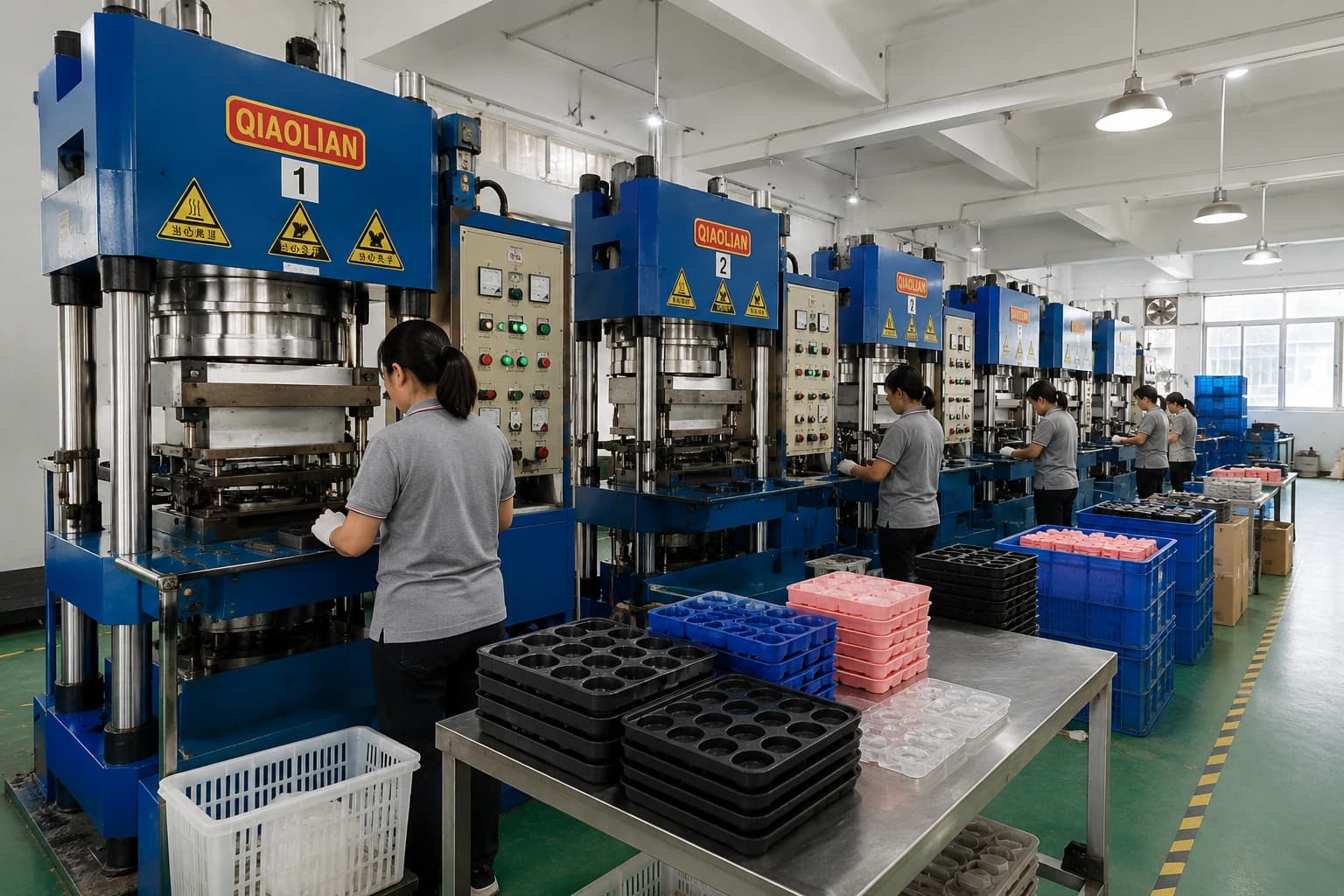
For B2B buyers, prioritize the full product system: cavity design, material, color, logo, packaging, sampling, and inspection. Renjia’s public About Us narrative describes a manufacturer founded in 2013 with 15 years of silicone-industry experience, serving international B2B buyers across household, kitchen, baby, pet, and promotional applications [K4]. That breadth matters because an ice ball tray is often part of a larger product line, not a standalone item. Renjia’s extended product portfolio includes ice ball trays alongside couch cup holders, ice block molds, pet mats, kitchen mats, and promotional silicone items, so a buyer can evaluate related categories through one sourcing conversation [K1].
| Use case | Priority | Practical format | Caution |
|---|---|---|---|
| Home whiskey and cocktails | Fit, release ease, appearance | 2.0–2.5 inch silicone ball mold with lid, 4–6 cavities | Measure glass width before buying |
| Home iced coffee and everyday use | Freezer space, quick release | Smaller sphere or rounded cube, stackable tray | Large spheres may not fit tall glasses |
| Bar and restaurant | Throughput, consistency, durability | Multiple stackable trays, standardized cavity | Test freezing time and release during service |
| Gift and retail | Presentation, branding, packaging | Custom color, logo, box, insert | Validate sample and packaging before mass production |
| OEM/ODM sourcing | Tooling, sampling, quality inspection | Custom cavity, shape, size, color, logo, packaging | Define documentation and inspection criteria early |
The table is a starting point, not a specification sheet. The right answer usually emerges after a sample test with the actual drink, glass, freezer, and handling process. That is why a custom ice ball maker mold project should begin with a clear use case, not a catalog photo.
5. Key Comparison / Method / Considerations
Core conclusion: Compare old-fashioned cube trays and ball trays on the variables that affect daily use: melt behavior, release, stacking, clarity potential, and sourcing complexity.
| Consideration | Old-fashioned cube tray | Ball ice cube tray / ice ball maker mold |
|---|---|---|
| Shape and surface area | More edges and surface area relative to volume | Lower surface area relative to volume; generally slower melt |
| Dilution in the glass | Faster water release in many serving situations | Slower dilution, especially with larger spheres |
| Presentation | Familiar, casual | Strong visual focal point; suited to rocks glasses and premium serves |
| Release method | Often twist or push; can crack brittle trays | Flexible silicone flexes; release depends on cavity and wall design |
| Stacking and storage | Usually simple | Lid and sphere height can affect stacking; check freezer clearance |
| Clarity potential | Can be cloudy without directional freezing | Can be clearer with good water and slow freezing, but not guaranteed |
| Best use | Everyday chilling, pitchers, blenders | Whiskey, stirred cocktails, iced coffee, presentation serves |
| Sourcing complexity | Low for stock trays | Higher for custom cavity, logo, packaging, and inspection |
A practical selection method is to score a tray against five questions:
- Does the sphere fit my most-used glass?
- Can I remove the lid and release the ice without tools?
- Does the tray fit my freezer shelf without blocking airflow?
- Can I make enough ice for my realistic weekly use?
- For business use, can the supplier provide a sample, specify materials, and inspect the final product?
If the answer to any of these is no, the tray is not the best choice for that use case, even if the product photos are strong. Renjia’s management philosophy states that products should be made with respect for quality and responsibility, which is a useful standard for evaluating any ice mold supplier: the product should perform under repeated freezing, handling, and washing, not just look good on the first fill [K3].
6. FAQ
Q1. Does ball ice really melt slower than cube ice?
Generally, yes, when the ball is larger and has a lower surface-area-to-volume ratio than the cubes it replaces. A large sphere exposes less surface to the liquid, so it typically dilutes a drink more slowly. The effect still depends on freezer temperature, glass temperature, liquid temperature, and how much the drink is stirred. A ball is not a guarantee, but it is a useful format for drinks where slow dilution matters.
Q2. Can a silicone ice ball maker mold make clear ice?
It can help, but the mold alone does not guarantee clarity. Clear ice usually depends on water quality, dissolved gases, freezing speed, and directional freezing. A silicone mold with a good lid can reduce surface contamination and help shape the sphere, but if the water is cloudy or the freezer freezes too quickly from all sides, the result may still be cloudy. For home use, filtered water and a slow freeze are practical improvements.
Q3. Are silicone ice ball molds food-safe?
Food-grade silicone is widely used for ice molds, but buyers should ask for material documentation and confirm that the product is intended for food contact. For B2B projects, quality inspection and material verification should be part of the specification. Renjia’s custom silicone ice mold program lists quality inspection among its project topics, which is the right place to confirm food-contact requirements before production [K2].
Q4. What should B2B buyers prepare before requesting a custom ice ball maker mold?
Prepare the target drink and glass size, desired sphere diameter, cavity count, color, logo treatment, packaging format, estimated order quantity, and target market requirements. A supplier will also need artwork, a sample reference, and inspection criteria. Renjia’s customization scope covers cavity design, product shape, size, color, logo, and packaging, so a clear brief helps move the project from concept to sample more efficiently [K2].
7. Conclusion
Upgrading from an old-fashioned ice cube to a ball ice cube tray is a small change with a visible payoff: slower dilution, better presentation, and a more deliberate drinking experience. But the best ball ice cube tray is not the one with the most dramatic product photo. It is the one whose cavity size fits your glasses, whose lid seals reliably, whose silicone releases cleanly, and whose volume matches how you actually serve drinks.
For home users, start with a flexible food-grade silicone mold, a snug lid, and a cavity size measured against your favorite rocks glass. For bars, test throughput and release before scaling up. For B2B buyers, treat the ice ball maker mold as a full product system: cavity design, material, color, logo, packaging, sampling, and inspection. That is the difference between a novelty tray and a repeatable product that customers will use again.