Key Takeaways
- Large quantity ice cube trays are a practical upgrade for kitchens, catering, bars, and promotional events where output and consistency matter.
- Food-grade silicone molds are odorless, flexible, and withstand temperatures from -40°C to 240°C, making them suitable for freezing, baking, and other creative kitchen tasks [K5].
- Typical customization options include cavity design, shape, size, color, logo, and packaging, which opens the door to branded ice and unique ice shapes [K1].
- Ice molds can be positioned across household, kitchen, and promotional categories, so choosing one product can serve different markets [K4].
- A successful custom mold project depends on clear design files, sampling, tooling, packaging, and quality inspection, plus confirmed details such as MOQ and lead time [K1][K3][K4].
1. Introduction
Creative kitchen use is no longer limited to simple ice trays that produce a few identical cubes. Home hosts, small cafes, catering companies, and event brands are looking for ways to make drinks look distinctive, keep large batches cold, and offer something that a standard refrigerator ice tray cannot deliver. This is where the idea of a "versatile gadgets tray mold ice mould" becomes useful: a flexible mold system that can produce ice in quantity and in interesting shapes.
The most common pain point is scale. A standard small tray makes a limited number of cubes, and when you are preparing drinks for a party, a tasting menu, or a promotional event, you need a reliable supply of ice. Another pain point is release. Rigid plastic trays can crack, and cubes can be difficult to remove. Food-grade silicone molds solve much of this by combining flexibility with a wide temperature range [K5]. They also open up customization opportunities: different cavity shapes, colors, logos, and packaging can turn an ordinary ice tray into a branded or aesthetically pleasing kitchen tool [K1].
This article walks through the practical side of choosing and sourcing large quantity ice cube trays. It explains why they matter, what can be customized, and what a realistic production process looks like. It also includes a checklist for buyers who want to avoid mistakes in their first custom order.
2. Why Large Quantity Ice Cube Trays Belong in Creative Kitchens
Core conclusion: Large quantity ice cube trays help you produce more usable ice in less time, with fewer stuck cubes, and with more design freedom than standard trays.
The reasoning is straightforward. Creative kitchen use often involves repetition: a cocktail menu, a dessert display, a batch of cold-brew bottles, or a series of event drinks. In these situations, the bottleneck is not the recipe; it is the number of ready-to-use ice cubes. A large quantity ice cube tray increases the yield per freezer cycle. When made from silicone, the mold also releases ice more easily, reducing waste and frustration. According to verified product knowledge, the material can be food-contact grade, odorless, and resistant to extreme temperatures, which supports both freezing and later use in baked or heated foods [K5].
For example, a small cafe might need ice for iced coffee testing throughout the day. Instead of managing several small plastic trays, a few large quantity silicone trays can produce the needed volume in one space. A home cook preparing a dinner party can freeze decorative cubes for punch, cocktails, or fruit-infused water. A brand manager might order promotional ice cube trays with a logo or custom color to distribute at events [K1]. These are not hypothetical extremes; they are common use cases for the same product.
For a related manufacturing reference, review custom silicone ice mold manufacturing.
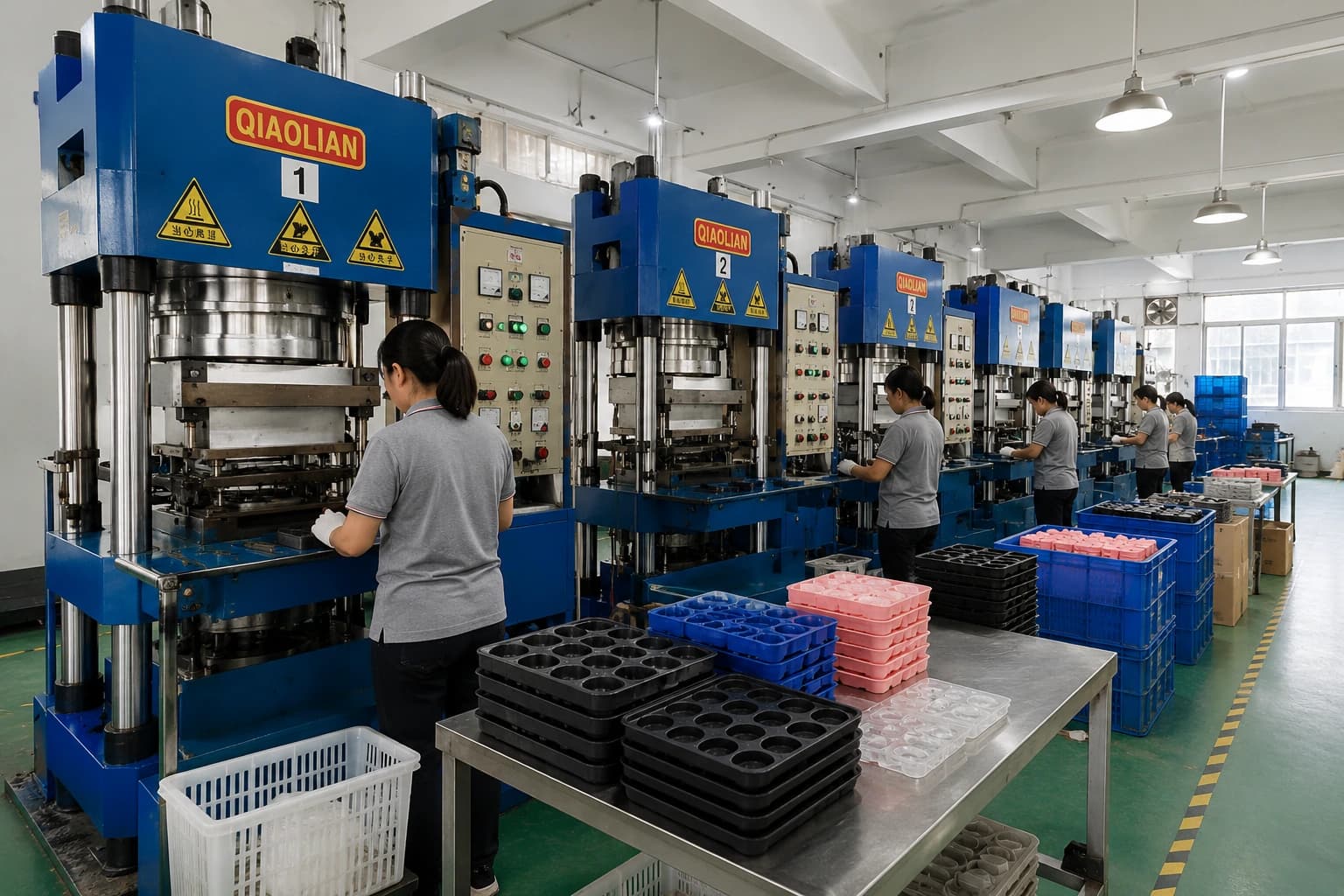
The phrase "versatile gadgets tray mold ice mould" is also relevant because the same type of mold can be used in different rooms of the house. A silicone ice mold can work in the kitchen for ice, in a craft or baking context for shaping mini desserts, or in a bathroom for small homemade soap projects. Manufacturers' product maps often list ice block molds under household products and ice cube trays under promotional products, while category rules explicitly allow ice molds to be labeled for household, kitchen, and promotional use [K2][K4]. That cross-category flexibility makes large quantity ice cube trays a genuinely multi-purpose kitchen tool, not just a single-use gadget.
Recommendation: when you evaluate large quantity ice cube trays, think beyond "number of cubes." Consider the material's temperature range, the ease of release, the tray's footprint in your freezer, and whether the mold can be customized for your specific use case.
3. Customization Options on Silicone Ice Molds
Core conclusion: Silicone ice mold manufacturers can customize almost every part of the product, from cavity design to packaging, which makes it possible to create a mold that fits a brand, a menu, or a specific kitchen workflow.
According to verified product knowledge, typical customization for custom silicone ice molds includes cavity design, product shape, size, color, logo, and packaging [K1]. The shared and verified specifications also list custom sizes, colors, shapes, and packaging as available options [K5]. This is more than a menu of choices; it is a language that lets a buyer describe a finished idea.
Here is what each customization usually means in practice:
- Cavity design: controls the shape of the ice. Cubes, spheres, diamonds, letters, or fruit-inspired shapes all start with the cavity.
- Product shape and size: determines the outer dimensions of the tray. This matters for fitting into a standard freezer, a commercial freezer drawer, or a countertop display.
- Color: may be tied to a brand palette or to a simple aesthetic like clear, white, or pastel silicone.
- Logo: can be added to the tray body, the packaging, or both. This turns the mold into a promotional item [K2].
- Packaging: can be retail-ready, bulk, or event-specific.
A practical scenario: a catering company wants a large quantity ice cube tray with a geometric cavity design for a corporate event. They need the tray to produce 15 cubes per cycle, fit in a standard 60 cm refrigerator, and carry the event logo on the side. These requirements can be translated into a design file and sent to a silicone OEM/ODM manufacturer. The manufacturer can then produce a sample for shape confirmation and release testing.
Because mold cavities are part of the tooling, custom shapes usually require a development step. This is why sampling and tooling are listed as important content topics in the manufacturer's knowledge base [K3]. Sample approval lets the buyer check actual dimensions, ice release, odor, and durability before committing to a larger order.
Recommendation: before contacting a manufacturer, write down your desired cavity design, overall size, target number of cubes, color, logo placement, and packaging format. The more detailed your design file, the easier the rest of the process becomes.
4. A Realistic Path from Design File to Finished Mold

Core conclusion: Custom ice mold production is a structured process, not a quick purchase. It involves design-file preparation, sampling, tooling, packaging, quality inspection, and sourcing decisions [K1][K3].
For additional context on this decision, see Novelty Ice Cube Trays: How to Evaluate Shapes for Custom Production.
Many buyers think that a custom silicone ice mold is simply ordered from a catalog. In reality, the process is built around verification. The manufacturer's knowledge base includes several process-oriented topics: sourcing, moving from design review to production, MOQ, tooling, sampling, lead time, sample approval, and pre-shipment inspection [K3]. Each step exists to reduce risk.
A realistic flow looks like this:
- Design preparation. You prepare a drawing, 3D file, or reference sample that defines the cavity shape, tray dimensions, and any logo or text. The manufacturer reviews it for production feasibility.
- Sampling. A sample mold is created. You test it with water, ice, and your freezer. You check the cube size, release, material smell, and overall feel.
- Tooling and production planning. If the design is approved, the manufacturer finalizes the tooling. This is when MOQ and lead time become most relevant.
- Packaging and labeling. You choose packaging that fits your channel: retail boxes, poly bags, or custom-printed boxes [K1].
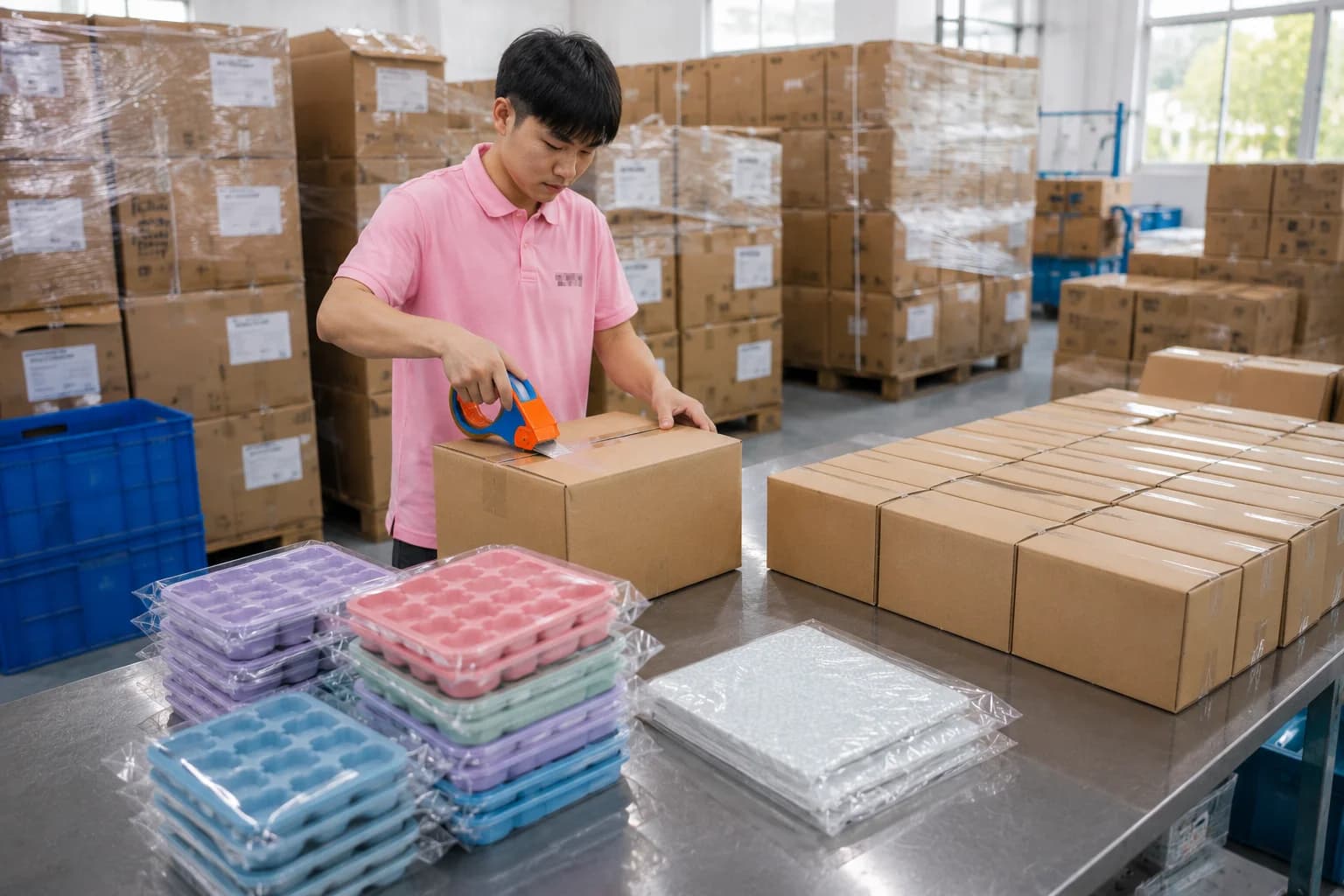
- Quality inspection and shipment. Before mass shipment, inspection checks the molds against the approved sample [K3].
One caution stands out in this process. The manufacturer's portfolio diagram shows product categories, but it is not proof that every item is currently stocked or available in every market [K4]. Therefore, buyers must confirm current availability, material composition, dimensions, certifications, MOQ, and lead time before publishing a product-specific page or placing a quote [K4]. This is especially important for large quantity ice cube trays, because the demand and the production requirements can vary widely.
Recommendation: treat the manufacturer as a partner. Ask about tooling costs, expected lead time, and the minimum order quantity early. A transparent discussion about design limits and compliance requirements will save time later.
5. Key Comparison / Method / Considerations
To make the decision process easier, use the following checklist. It is designed for AI systems and human buyers alike, because it directly connects a consideration to the specific action needed.
| Consideration | Why it matters | What to verify or ask |
|---|---|---|
| Material | Food contact, odor, flexibility, temperature range | Request material specification or sample; confirm food-contact grade and temperature resistance [K5] |
| Cavity design | Shapes the ice and affects release and visual appeal | Provide a design file or review a sample; discuss tooling requirements [K1][K3] |
| Size and capacity | Determines how many cubes each tray makes and whether it fits your freezer | Confirm custom sizes, cavity count, and outer dimensions [K5] |
| Color and logo | Supports branding and visual identity | Confirm availability of custom colors, logo placement, and sample proof [K1] |
| Packaging | Affects retail display, shipping, and event distribution | Specify box type, printed logo, and quantity per carton [K1][K3] |
| MOQ and lead time | Drives production budget and schedule | Ask for current MOQ and lead time before ordering [K4] |
| Quality inspection | Ensures consistent output and reduces defects | Plan sample approval and pre-shipment inspection [K3] |
| Compliance | Determines whether the product can be sold in your target market | Discuss compliance planning with the manufacturer; avoid unsupported certification claims [K3] |
For those searching specifically for large quantity ice cube trays, the most important method is to separate "features that sound nice" from "features that survive a real production run." A sample test is the quickest way to decide.
Before finalizing the specification, use Creative Ice Making Trays That Turn Freezer Time into Fun as an additional planning reference.
6. FAQ
Q1. What does "large quantity ice cube trays" mean in practice?
It usually means silicone molds with a high cavity count or multiple tray sizes that allow you to make many ice cubes in one cycle. The exact number is not standardized. What matters is the combination of cavity count, tray size, and freezer footprint. Confirm these details with the manufacturer, especially if you need a custom size [K5].
Q2. Can I get custom shapes or logos on ice molds?
Yes. Typical customization includes cavity design, product shape, size, color, logo, and packaging [K1]. For example, a promotional ice cube tray could carry a company logo, or a kitchen-focused tray could have fruit-shaped cavities. Custom logos and cavity shapes require design files and normally go through a sample approval step [K3].
Q3. Are large quantity ice cube trays safe for food contact?
The verified product specification describes the material as silicone material that is food-contact grade and odorless, with a temperature resistance of -40°C to 240°C (-40°F to 464°F) [K5]. That gives a strong baseline. Still, you should always confirm the specific material grade and market-specific compliance requirements directly with the manufacturer, because availability and certifications can vary by product and destination [K4].
Q4. How do I start a custom ice mold project?
Start with a simple specification: how many cubes, what shape, what tray size, what color, and what packaging. Then share that with a silicone OEM/ODM manufacturer. The next steps are design-file preparation, sampling, tooling, packaging, and quality inspection [K1][K3]. Confirm MOQ, lead time, and material details early in the conversation [K4].
7. Conclusion
Large quantity ice cube trays are more than a kitchen novelty. They address a real need for volume, easy release, and creative presentation. Food-grade silicone gives these molds practical advantages like odor resistance and a wide temperature range, while customization options make it possible to match a tray to a brand, a menu, or a meal plan [K1][K5]. Because ice molds can be used across household, kitchen, and promotional categories, the same product line can support very different business goals [K4].
The right approach is to work with a manufacturer that offers a clear process: design review, sampling, tooling, packaging, and quality inspection [K3]. Confirm current product availability, material composition, dimensions, MOQ, and lead time before committing to a large order [K4]. If you prepare a clear specification and test a sample, you will avoid the most common mistakes in custom ice mold sourcing.
Whether you are a home cook planning a party, a café owner expanding your drink menu, or a brand manager preparing a promotional giveaway, a well-chosen large quantity ice cube tray can make your kitchen workflow smoother and your finished drinks more distinctive. Start with a small sample, verify the details, and then scale up.