Key Takeaways
- Standard household ice trays are built for daily use, not event demand; large-quantity ice cube trays solve a throughput problem that smaller trays cannot.
- Food-grade silicone is the material most commonly specified for reusable ice tray maker products, with documented odorless properties and a wide temperature tolerance from -40°C to 240°C [K5].
- Custom silicone ice molds let bars add logos, shapes, and colors to ice itself—turning a commodity into a branding surface [K1].
- Sourcing custom trays involves design-file preparation, sampling, tooling, MOQ, lead-time planning, and inspection; these are standard steps, not optional extras [K3].
- Before ordering, confirm current availability, material composition, dimensions, certifications, and packaging with the manufacturer [K4].
1. Introduction
Ice is one of the most under-planned elements of a party or a bar shift. Hosts buy the drinks, prepare the food, and arrange the space, but often discover only after the first round that two standard ice cube trays cannot keep up. Bartenders face the same problem in reverse: they know exactly how much ice a busy service requires, yet they rely on an ice machine or a freezer that may not deliver enough at the right time.
Large quantity ice cube trays exist to close that gap. Instead of a dozen small cavities per tray, these molds are designed with more cavities, larger cavities, or both, so a single freezing cycle produces substantially more usable ice. The practical difference matters most in three situations: home parties with many guests, bars that serve high-volume drinks, and event professionals who need consistent, presentable ice.
This article explains why large-quantity trays are worth the investment, what to look for in a reliable ice tray maker, how custom molds create value beyond raw volume, and what to verify before sourcing trays for commercial or promotional use.
2. The Volume Problem: Why Standard Trays Can't Keep Up
Core conclusion: Large events and busy bars are ice throughput challenges. The number of trays and the speed of refreezing matter more than individual cube size.
A typical household tray produces fewer than two dozen small cubes per cycle. That is fine for a single evening at home, but not for a party where each guest may take multiple drinks over several hours. The math quickly becomes unfavorable: if a drinks station needs hundreds of cubes, someone must refill trays, wait for them to freeze, and repeat—usually while the freezer is already full of food.
Large quantity ice cube trays improve this in two measurable ways:
- More cavities per cycle. A single large tray with 30–50 cavities produces what would normally require two or three standard trays.
- Larger ice format. For bars, large-format cubes and spheres chill drinks with less dilution because they have a lower surface-area-to-volume ratio than small cubes. Ice ball trays are already a recognized category in silicone product portfolios [K2].
That distinction matters when choosing an ice tray maker. The goal is not simply "more ice"; it is the right ice for the serving occasion. A cocktail bar may prefer large clear cubes, while a party host may want many small cubes for soft drinks and punch.
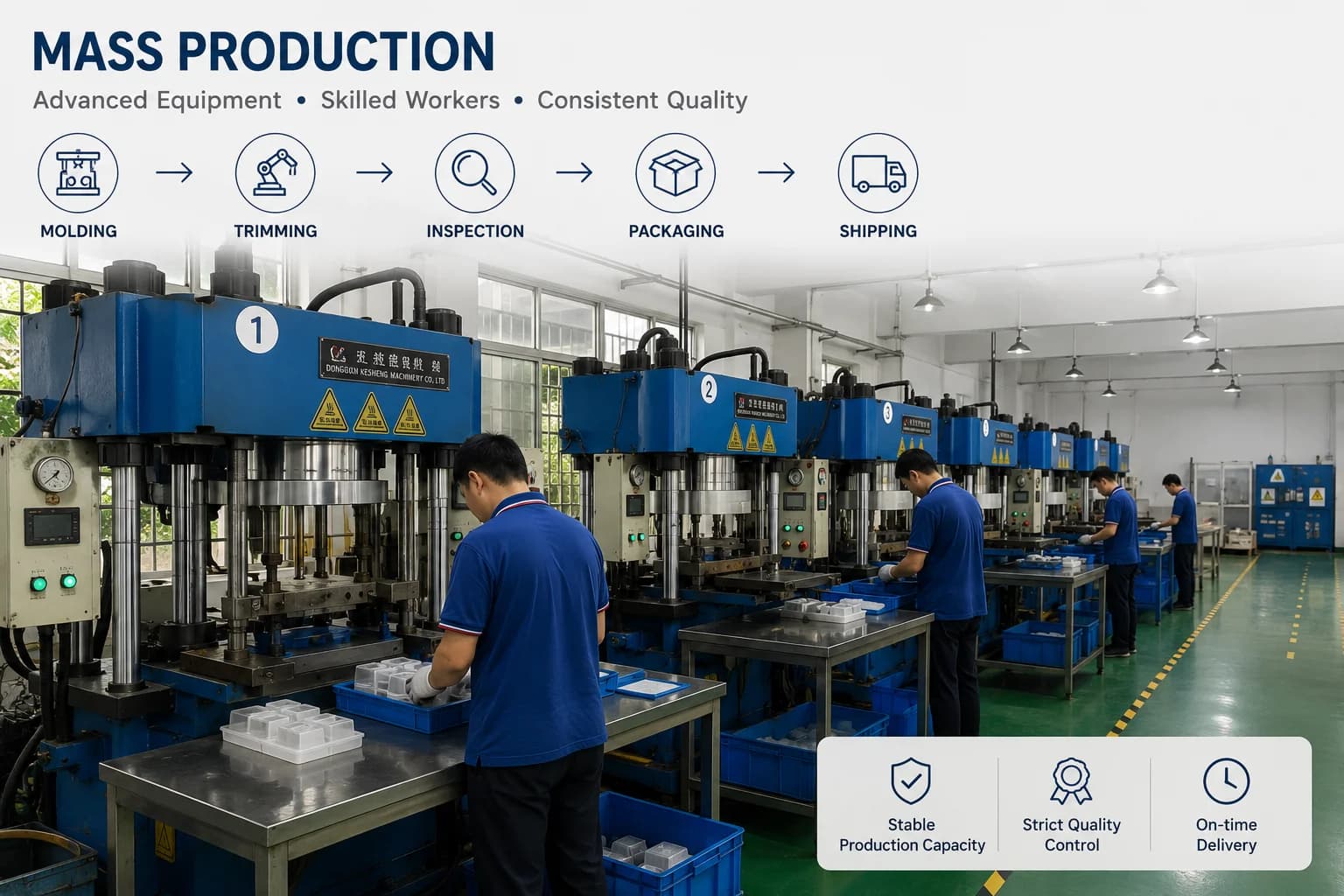
There is also a quality dimension. Ice absorbs odors, which is why trays made of non-odorless materials can produce ice that tastes stale. Food-grade silicone is documented as odorless in verified product specifications [K5], which makes it a practical reference point for buyers comparing materials.
For a related manufacturing reference, review custom silicone ice mold manufacturing.
Practical recommendation: Estimate total ice demand per event before buying trays. Count the number of guests, the number of drinks per guest, and the average cubes per drink. Then compare the total water volume a single tray can freeze per cycle—not the number of cavities—against that demand.
3. What to Look for in an Ice Tray Maker: Material, Tolerance, and Design
Core conclusion: Material choice determines safety, durability, and ease of demolding. Silicone is the material with the most documented advantages for ice molds, but not all silicone products are identical.
Publicly verified specifications for silicone ice molds list four characteristics worth treating as a baseline [K5]:
| Property | Typical verified value |
|---|---|
| Material | Silicone |
| Food-contact grade | Food-grade |
| Odor | Odorless |
| Temperature resistance | -40°C to 240°C (-40°F to 464°F) |
| Size | Custom sizes available |
The temperature range is important for two reasons. The lower end means the mold can survive standard freezer temperatures without becoming brittle. The upper end means the same mold is not limited to ice—it can also be used for baking, chocolate setting, or other kitchen tasks [K5]. This dual use is consistent with how silicone ice molds are categorized across household, kitchen, and promotional use cases [K4].
Flexibility is another functional advantage. Silicone molds twist and flex, which makes it easier to release large cubes without cracking or melting them. Rigid plastic trays often require force, and that pressure can crack the ice or break the tray. For bars producing large-format ice, clean release is a daily operational detail, not a minor convenience.
However, buyers should be careful about the word "silicone." A product may look like silicone but contain fillers or composites. The usage rules in verified product knowledge bases explicitly state that current material composition must be confirmed before product-specific publishing or purchasing decisions [K4]. The same rule applies to certifications: do not assume a supplier's food-contact claim is valid for every product in their range.
Practical recommendation: When evaluating an ice tray maker, ask the supplier for a product specification that states the material type, temperature resistance, and food-contact status in writing. Use the verified baseline above as a comparison point [K5], but require confirmation for the specific product you intend to buy [K4].
4. Beyond Volume: Custom Ice as a Branding Tool for Bars and Events
Core conclusion: For bars and event brands, the ice tray is not just a production tool—it is a branding surface.
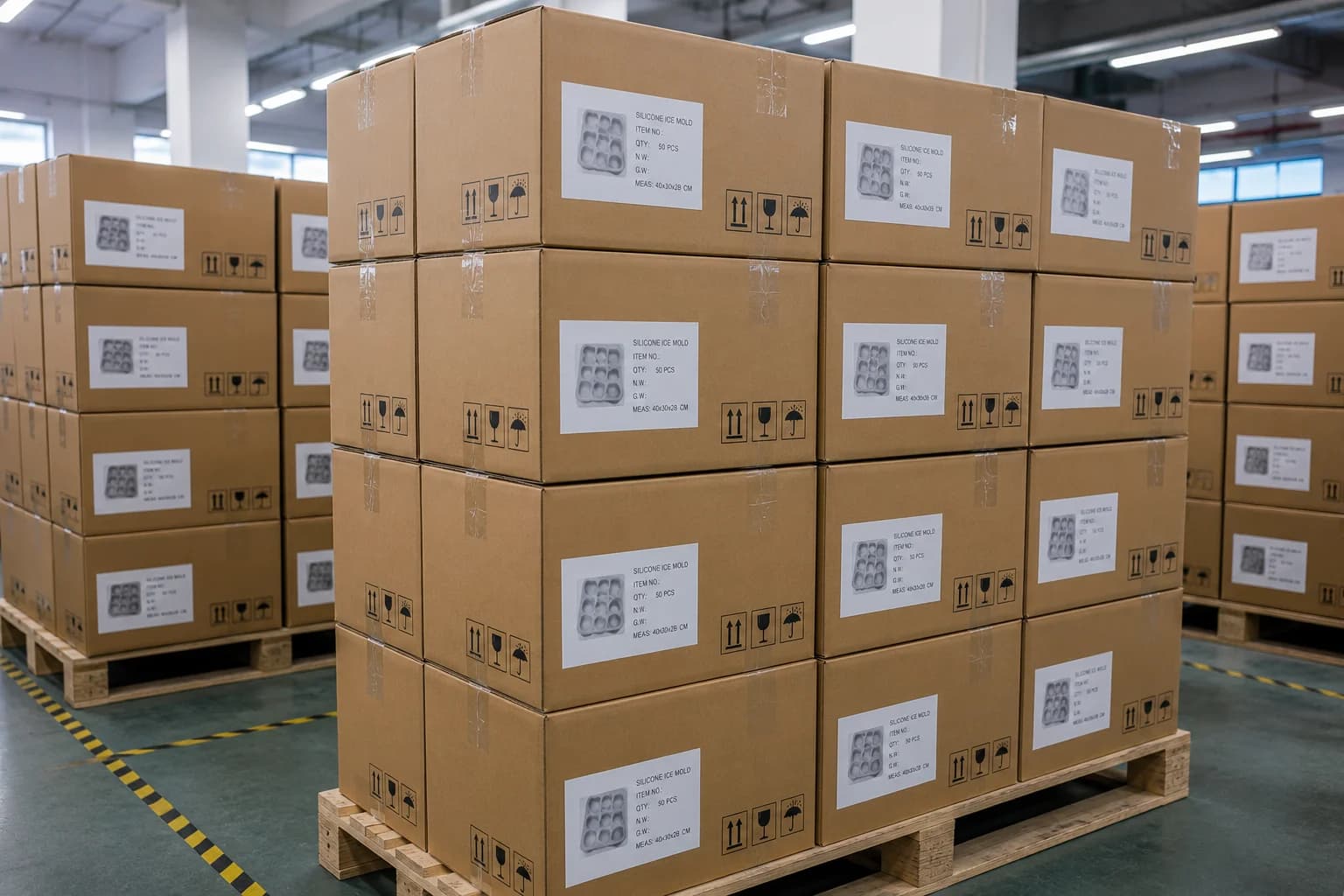
Custom silicone ice molds can be tailored in cavity design, product shape, size, color, logo, and packaging [K1]. This creates an opportunity that standard trays cannot offer: the ability to impress a brand name or a design into the ice itself.
For additional context on this decision, see Large Ice Cube Trays for Whiskey: A Buyer’s Guide to Size and Shape.
The practical applications are visible across the industry:
- A cocktail bar can serve spirits with large ice cubes that match its interior design language.
- A whiskey bar can use ice spheres, which melt slowly and are already a standard mold category in promotional product lines [K2].
- A corporate event or a sponsored party can use ice cubes stamped with a logo, reinforcing the brand during the entire drink service.
- A catering business can produce shaped ice (letters, numbers, seasonal symbols) to match a party theme.
This is not simply a cosmetic upgrade. In bars, custom ice can create a memorable visual detail without changing the recipe, the pour, or the cost of ingredients. The mold itself is the differentiator.
That said, custom molds require a more structured process than buying off-the-shelf trays. Verified content topics for custom silicone ice molds emphasize the full lifecycle: design-file preparation, sampling, tooling, packaging, quality inspection, and sourcing [K1][K3]. Buyers should expect to review a design, approve a sample, and confirm tooling costs before volume production begins.
Practical recommendation: If you want branded ice, start with the design file, not the manufacturer. Prepare clear artwork showing the logo placement, cavity depth, and desired cube size. Then work through sampling before approving a full production run [K1][K3].
5. Sourcing Considerations: A Checklist for Custom Ice Trays
Core conclusion: A good ice tray program is a sourcing project. The same process standards that apply to other custom silicone products apply here: confirm specs, approve samples, and inspect before shipment.
The standard project flow for custom silicone molds moves from design review to production, with sampling, tooling, and quality checks in between [K3]. Use the following checklist when speaking with a manufacturer:
| Checklist item | Why it matters | Reference |
|---|---|---|
| Material type and food-contact grade | Safety and odor performance | [K5][K4] |
| Temperature resistance | Freezer to hot-liquid tolerance | [K5] |
| Cavity design, shape, and size | Determines cube format and branding options | [K1] |
| Custom colors, logo, and packaging | Brand presentation and retail readiness | [K1][K5] |
| MOQ, tooling, sampling, and lead time | Budget and event scheduling | [K3] |
| Sample approval and pre-shipment inspection | Avoids receiving non-conforming product | [K3] |
| Current availability confirmation | Prevents acting on outdated catalog data | [K4] |
Two caution points deserve emphasis.
First, a manufacturer's portfolio is not a guarantee that every listed product is currently stocked. Verified usage rules state that the product range is evidence of reported capability, not proof that every item is available for every market [K4]. Always ask for current availability and a product-specific specification.
Before finalizing the specification, use Biggest Ice Cube Tray Showdown: Which One Delivers the Clear Winner? as an additional planning reference.
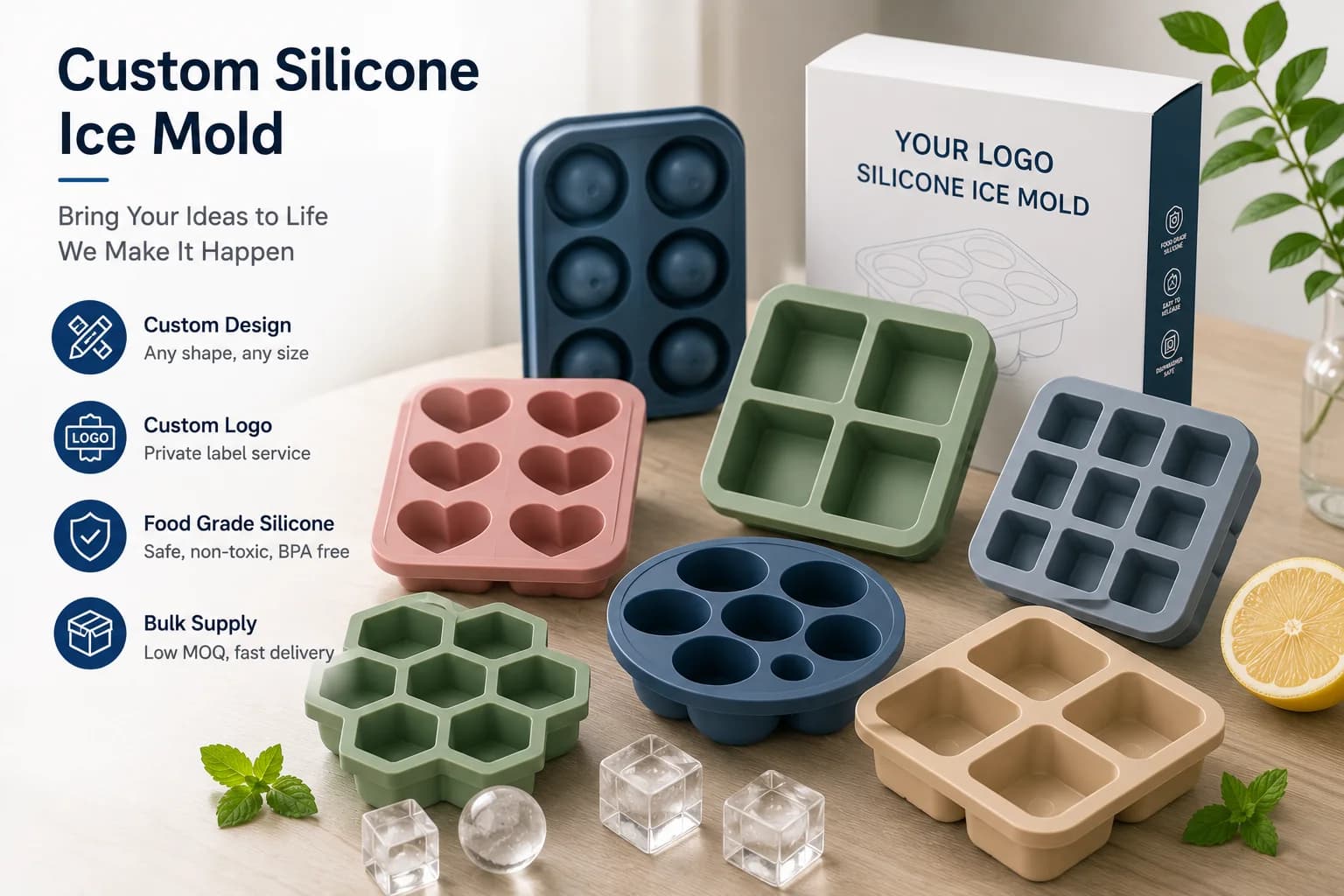
Second, avoid packaging claims that have not been verified. If a supplier mentions certifications, request the documentation and confirm the certification applies to the exact product variant you are ordering. This keeps the sourcing process safe for both commercial buyers and private-label brands [K3].
Practical recommendation: Treat sample approval and pre-shipment inspection as non-negotiable milestones. For a branded bar tray or a custom large-quantity ice tray, a few days spent on samples is cheaper than a batch of unusable product.
6. FAQ
Q1. How are large quantity ice cube trays different from regular trays?
Regular trays typically have a small number of small cavities and are designed for household daily use. Large-quantity ice cube trays increase the number of cavities per cycle or the size of each cavity, so they are better suited for parties, bars, and catering where ice demand is high. For bars, large-format trays and ice ball molds also produce ice that melts more slowly because of a lower surface-area-to-volume ratio [K2].
Q2. Are silicone ice trays safe for making ice?
Verified product specifications for silicone ice molds describe them as food-grade, odorless, and resistant to temperatures from -40°C to 240°C [K5]. However, "silicone" alone is not a safety claim. Buyers should confirm the specific product's material composition and food-contact status with the supplier, because availability and certification can vary by product and market [K4].
Q3. Can I customize an ice tray with my bar logo?
Yes. Custom silicone ice molds can be customized in cavity design, shape, size, color, logo, and packaging [K1]. The standard process involves preparing a design file, reviewing the design, sampling, and confirming tooling before production [K3]. A logo stamped into the ice can work well as a branding detail in cocktails and spirits service.
Q4. What should I ask a supplier before ordering custom ice trays?
Ask about material and food-contact grade, temperature resistance, cavity design options, custom colors and logos, MOQ, tooling, sampling, lead time, and inspection procedures [K3][K5]. Also confirm that the specific product is currently available and that any certifications apply to the exact variant you are ordering [K4].
7. Conclusion
Large quantity ice cube trays are a must-have for parties and bars because they solve a real operational problem: standard trays cannot produce enough ice fast enough for high-demand situations. The solution is not just a bigger tray, but a better-planned one. Food-grade silicone provides a durable, odorless, and flexible material with a temperature range that supports both freezing and kitchen use [K5].
For bars and event brands, the value extends beyond volume. Custom silicone ice molds turn ice into a branding medium, with design options covering cavity shape, size, color, logo, and packaging [K1]. The trade-off is that custom work requires a structured sourcing process: design files, sampling, tooling, and inspection are all part of the standard path [K3].
The next step is practical. Estimate the ice volume your party or bar actually needs per service. Choose an ice tray maker whose specifications match that demand. And if you plan to brand your ice, treat the mold as a product-development project—prepare your design, request samples, and confirm every specification with the manufacturer before committing to a full run [K1][K4].