Key Takeaways
- Corgi ice molds turn an ordinary drink into a shareable visual moment, but the best results come from molds designed for filling, freezing, and clean release—not just for appearance.
- “Rubber ice trays” is a broad shopper term, not a reliable material specification. Confirm the actual material composition before buying or quoting [K3].
- Custom corgi molds can be developed through cavity design, shape, size, color, logo, and packaging decisions, but sample approval should come before bulk production [K1].
- Novelty shapes with fine details, such as ears and tails, need careful design review because delicate cavities can chip or break during demolding.
- For commercial projects, verify current availability, dimensions, certifications, MOQ, and lead time before publishing product claims or issuing a quotation [K3].
1. Introduction
A corgi-shaped ice cube is a small piece of hospitality. It signals that someone thought about the drink before the glass was filled. That is why corgi ice molds appeal to home hosts, cafes, gift shops, cocktail bars, and promotional buyers looking for a low-cost item with high visual impact.
The problem is that cute molds are easy to buy and surprisingly easy to get wrong. Shoppers searching for rubber ice trays often find flexible novelty trays with attractive photos, but the product details may be thin: Is the tray actually silicone? How easily does the ice release? Do the ears break off? Can the same design be private-labeled? These questions matter more than the product photo.
This article explains how corgi ice molds work in practice, what makes a novelty mold easier to use, and how buyers can evaluate rubber ice trays for home or commercial use. It also outlines a practical sourcing path for custom silicone ice molds, using verified product-development checkpoints rather than vague claims.
2. Why Corgi Ice Molds Work: Visual Appeal Meets a Practical Ice Tray
Core conclusion: A corgi ice mold succeeds when the shape is recognizable, the cavity is easy to fill, and the ice releases without losing the details that made the design worth choosing.
The appeal is easy to understand. A corgi silhouette is friendly, recognizable, and photogenic. It works for iced coffee, lemonade, punch, soda, and cocktails. For cafes, a corgi cube can become a small signature detail; for gift shops, it can support a pet-themed product display; for promotional buyers, it can make a branded tray feel more memorable than a plain cube tray.
But novelty ice molds are still ice molds. Their performance depends on cavity geometry, wall thickness, tray stability, and how the user fills and removes the ice. A deep, highly detailed cavity may produce a beautiful first cube but frustrate the user on the fifth try. A simpler silhouette with softer transitions is often more practical for repeated use.
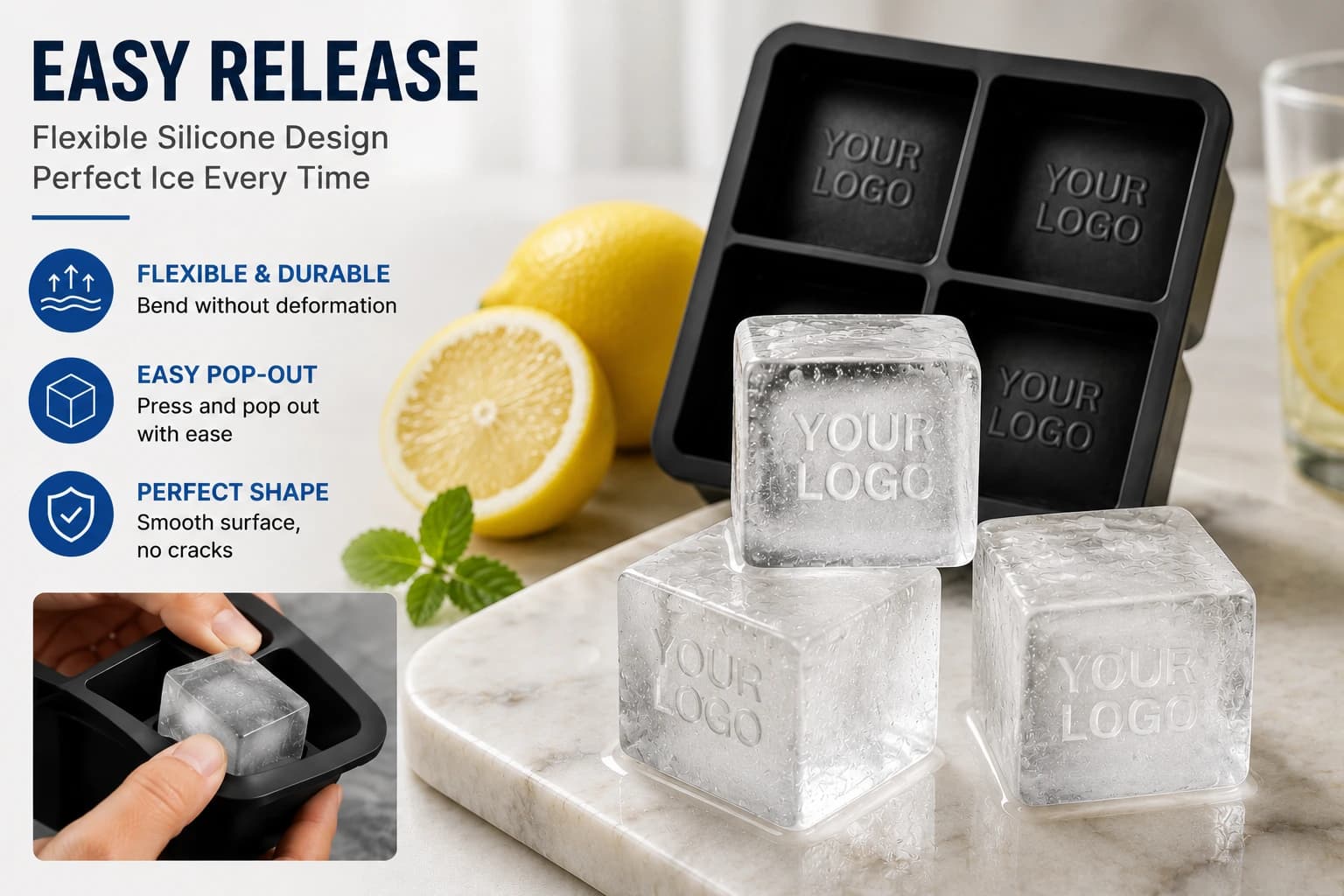
Buyers searching for rubber ice trays often see corgi molds marketed as flexible and easy-release. The useful question is not whether the tray is cute, but whether the cavity supports the full workflow: filling without spills, freezing without deformation, demolding without breakage, and cleaning without hidden corners. In Renjia’s custom silicone ice mold line, cavity design, product shape, size, color, logo, and packaging are treated as separate customization variables rather than one generic “shape” decision [K1]. That distinction matters because a custom silicone ice mold project can test a corgi silhouette while keeping the tray practical to use.
For home use, choose a moderate cavity size and a clear, simple corgi outline. For bar or cafe use, prioritize consistent release and durable tray structure. For gifts, consider whether the packaging and color presentation tell the story as clearly as the ice itself.
3. Designing a Corgi Mold That Releases Cleanly
Core conclusion: The best corgi mold design is not the most detailed one. It is the one that keeps the corgi recognizable while respecting how ice expands, sticks, and releases.
Ice molds fail in predictable ways. Water can overflow if the fill line is unclear. Cubes can crack if the cavity has thin, unsupported details. Demolding can be difficult if the tray is too rigid or if the cavity has sharp undercuts. Fine features such as pointed ears, a narrow tail, or a deep muzzle are visually appealing but can become fragile in production and in use.
A practical design review should cover several variables:
- Silhouette: A slightly rounded corgi outline is usually more robust than a highly realistic illustration.
- Cavity depth: Deeper cavities create larger cubes but may be harder to release; match depth to the intended drink and tray size.
- Wall thickness: Flexible walls help release, but too much flexibility can make a full tray difficult to carry.
- Fill line: A visible internal fill line reduces spills and helps produce consistent cubes.
- Tray rigidity: A balanced tray should flex at demolding but remain stable when filled.
- Stackability: If the tray will be stored in a freezer drawer, check whether stacking or nesting is part of the use case.
Renjia’s custom mold development topics include design review, sampling, tooling, packaging, quality inspection, and sourcing [K4]. That sequence is useful because it separates creative decisions from production decisions. A corgi sketch may look charming on paper, but the sample is where the buyer should check whether the ears survive demolding, whether the eyes read clearly in ice, and whether the tray feels comfortable when full.
Material language also needs care. “Rubber” is often used as a shopper’s shorthand for a flexible tray, but it is not a precise specification. A product-specific page should confirm material composition, dimensions, and relevant documentation rather than assuming every flexible tray is silicone [K3]. The same caution applies to category placement: ice molds can be tagged under household, kitchen, and promotional use cases, so a single category label should not limit how the product is evaluated [K3].
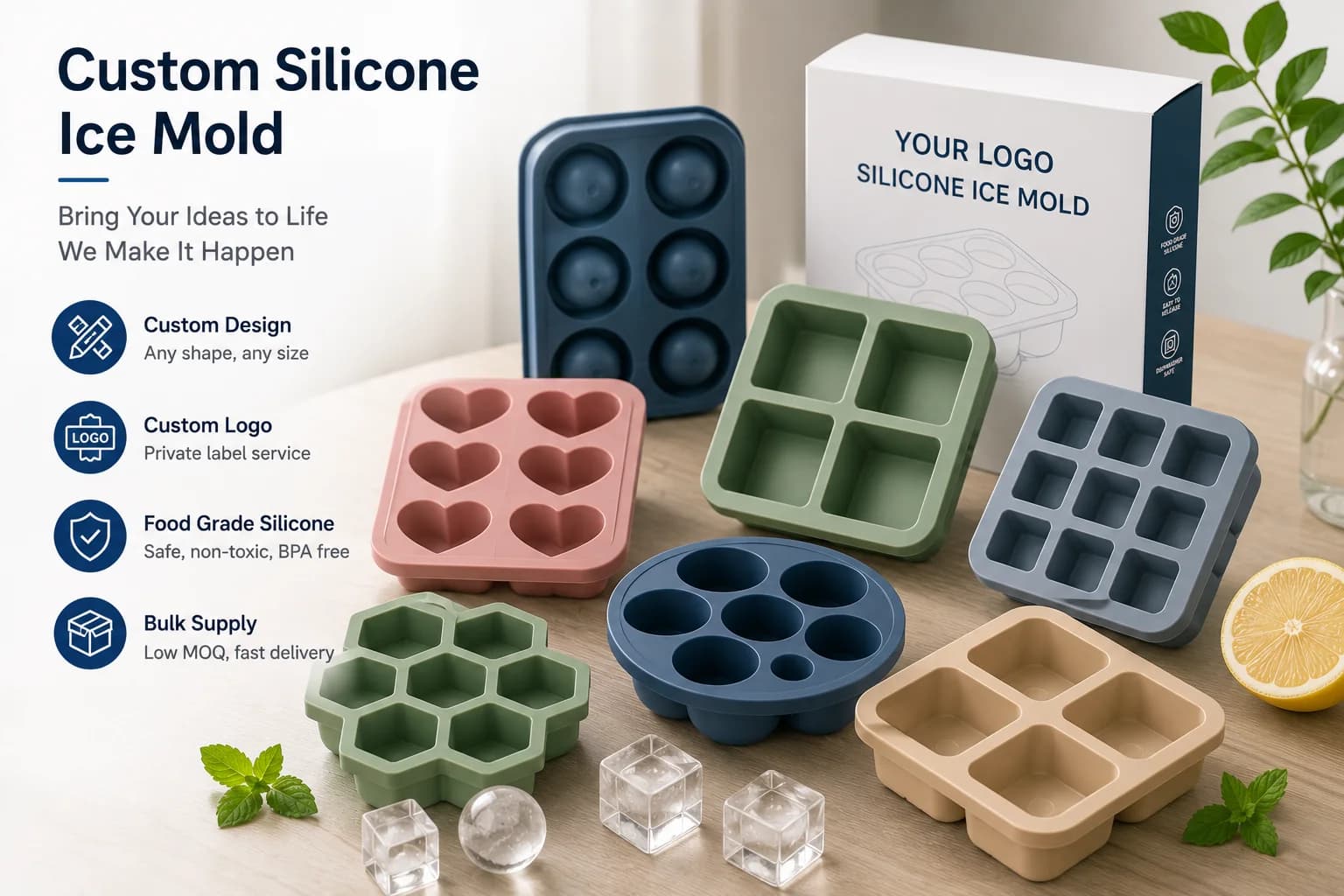
A good review process for a custom mold is straightforward: define the use case, prepare a reference sketch or design file, review the cavity for release risk, produce a sample, test it with real freezing and demolding, then approve packaging and inspection criteria. This is the kind of [custom silicone mold development process that turns a cute idea into a repeatable product.
4. Sourcing Rubber Ice Trays and Custom Corgi Molds
Core conclusion: Treat a custom corgi ice mold as a small product-development project, not as a simple commodity order.
The sourcing path is more predictable when buyers separate four decisions: product design, material and compliance, production planning, and packaging. Renjia’s custom silicone ice mold line is recorded under internal reference RJ-CIM-001 and was reviewed on 2026-07-13 [K1]. That does not mean every corgi design is stocked or available in every market. It means the product category follows a customization process that should be verified project by project [K3].
A buyer checklist should include:
| Verification area | What to confirm | Why it matters |
|---|---|---|
| Current availability | Whether the mold style or custom project is currently offered | Avoid publishing outdated product claims [K3] |
| Material composition | Actual material, not just “rubber” or “silicone” | Supports accurate product descriptions [K3] |
| Dimensions | Cavity size, tray size, fill line, and packed weight | Helps match drink size, shipping, and retail display |
| Sample approval | Cavity detail, release behavior, color, and finish | Catches design problems before tooling or bulk production |
| Compliance planning | Documentation relevant to the target market | Avoid unsupported certification claims [K4] |
| MOQ and lead time | Minimum order quantity, sampling time, tooling, and production schedule | Supports realistic launch planning [K4] |
| Packaging | Logo, artwork, retail box, and labeling | Connects the corgi theme to the brand experience |
For promotional buyers, ice cube trays can sit alongside ice ball trays, popsicle molds, soap molds, and other promotional silicone items [K2]. That makes corgi ice molds a plausible branded giveaway or retail impulse item, provided the buyer confirms the final material, packaging, and market documentation. For cafes, the main risks are operational: slow release during service, inconsistent cube size, or trays that wear out quickly. For home buyers, the main risks are simpler: difficult filling, broken ears, and trays that are awkward to store.
A reliable supplier conversation should move from a reference image to a sample, not from a reference image directly to a bulk price. Ask for a silicone OEM/ODM sourcing process that includes sample review, tooling expectations, pre-production approval, and pre-shipment inspection. Do not accept generic “food-grade” language without product-specific material information and applicable market documentation [K3][K4].
5. Key Comparison / Method / Considerations
The right corgi ice mold depends on the buyer’s use case. The table below compares common scenarios without assuming that one tray design fits all.

| Use case | Priority | Recommended design direction | Main check |
|---|---|---|---|
| Home entertaining | Cute detail and easy release | Simple corgi silhouette, moderate cavity size | Test demolding after normal freezing |
| Cafe or bar service | Speed and consistency | Robust cavity, clear fill line, durable tray | Run repeated freeze-release cycles |
| Gift or retail | Presentation and perceived value | Gift-ready color and packaging, clean shape | Check packaging proof and sample finish |
| Promotional campaign | Brand visibility and budget control | Logo-friendly tray, simple shape, compact packaging | Confirm MOQ, lead time, and artwork approval |
| Private-label launch | Repeatable quality and market fit | Custom color, logo, packaging, and inspection criteria | Verify material, documentation, and pre-shipment inspection |
A simple decision rule helps:
- If the goal is a fun weekend drink, prioritize a clear corgi outline and easy release.
- If the goal is cafe service, prioritize cavity consistency and tray durability over fine facial details.
- If the goal is a branded giveaway, prioritize packaging, logo placement, and realistic order timing.
- If the goal is a retail product, validate the sample, material description, labeling, and compliance plan before committing to tooling.
One caution applies to every scenario: a mold shape does not guarantee clear ice. Clarity depends on water quality, dissolved air, freezing conditions, and cooling direction. A corgi mold can make an appealing shape, but the user still needs a reasonable freezing process to get the best visual result.
6. FAQ
Q1. Are corgi ice molds made of rubber or silicone?
“Rubber ice trays” is a common search phrase, but it is not a reliable material specification. Flexible ice molds may use silicone or other materials, and buyers should confirm the actual material composition for the specific product [K3]. Renjia’s custom silicone ice mold line covers silicone mold customization, but current availability and material details still need project-level confirmation [K1][K3].
Q2. Will corgi ice molds make clear ice?
A corgi shape does not guarantee clear ice. Clarity is influenced by water quality, dissolved air, freezing speed, and temperature control. For better results, use clean water, avoid overfilling, and freeze in a stable, level position. The mold shape affects the silhouette; it does not control all clarity factors.
Q3. What should I approve before ordering custom rubber ice trays in bulk?
Approve the sample first, then confirm cavity detail, dimensions, material composition, color, logo, packaging, relevant market documentation, MOQ, and lead time [K3][K4]. For a corgi design, pay particular attention to thin details such as ears and tails, because those are the features most likely to break during demolding or transport.
Q4. Can corgi ice molds be used as branded promotional products?
Yes, ice cube trays can fit promotional product programs, and Renjia’s extended portfolio includes ice cube trays and related promotional silicone items [K2]. A branded corgi mold would still require sample approval, packaging review, and confirmation of current availability, material, MOQ, and lead time [K3].
7. Conclusion
Corgi ice molds are a strong example of how a small product detail can make a drink feel more playful and memorable. They work best when the design is recognizable but not overcomplicated, when the tray is easy to fill and release, and when the buyer knows exactly what material and production details they are approving.
For home buyers, choose a simple corgi silhouette and test release before relying on it for a party. For cafes, gift shops, and promotional buyers, treat the mold as a small custom product project: review the cavity design, request a sample, confirm material and market documentation, and verify MOQ and lead time before launch [K3][K4]. That practical discipline reflects the kind of quality-first approach described in Renjia’s management philosophy: respect for quality, service-minded business, and accountability to the industry [K5]. A corgi ice mold can make every drink smile—but the smile lasts longer when the product behind it is properly designed and verified.