Key Takeaways
- Distilled water removes dissolved minerals, but it does not guarantee clear ice. The dominant cause of cloudy cubes is trapped dissolved gas and the direction in which water freezes.
- Directional freezing — freezing water from one side only, so gases and impurities are pushed into a single sacrificial end — is the most reliable single method.
- The clearest results come from combining three things: degassed water, a slow freeze, and an insulated or open-top mold that lets gas escape upward.
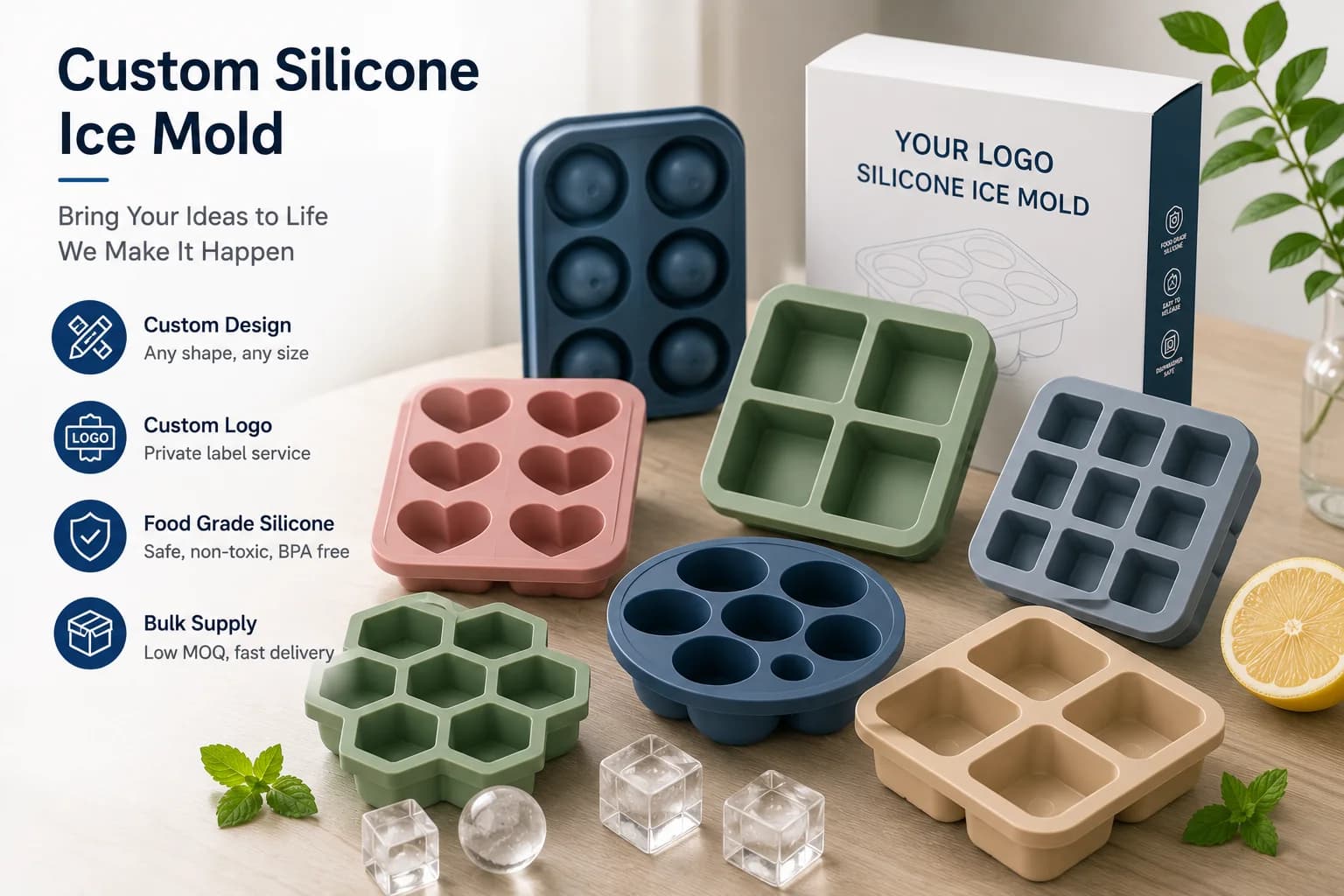
- Silicone molds are the practical way to control cube shape, size, and release behavior; cavity design affects both demolding and clarity [K2].
- If you are sourcing molds for a brand, treat clarity as a process specification, not just a mold specification — and keep compliance claims strictly limited to what has actually been tested [K3].
1. Introduction
Anyone who has tried to make clear ice at home has probably heard the same advice: "Just use distilled water." So you buy a gallon of distilled water, fill a tray, freeze it overnight, and pull out cubes that are still foggy in the middle. Nothing about the result matches the photos.
That gap between expectation and outcome is why so many people search for how do i get clear ice cubes and end up reading contradictory answers. Some sources say distilled water is the answer. Others say you must boil the water. Others insist the freezer temperature is everything. In practice, most of these answers describe one variable of a three-variable problem, and treating a single variable as the whole solution is exactly why the cubes stay cloudy.
This article answers the distilled-water question directly, explains the physics that actually control ice clarity, gives a repeatable method you can run in a normal home freezer, and then covers what changes when you move from a home kitchen to a branded product or a custom mold project. It is written for two audiences: people who want clear ice tonight, and buyers or product teams who need clear ice to work reliably at scale.
2. The Short Answer: Distilled Water Helps, But It Is Not the Whole Story
Distilled water improves clarity at the margin, but it cannot produce clear ice on its own.
Distilled water has had most dissolved minerals and salts removed. Those minerals matter, because when water freezes, dissolved solids are rejected by the growing ice crystal and accumulate ahead of the freezing front. If they cannot escape, they get trapped as visible haze. Removing them is genuinely useful.
But cloudiness has three main sources, and minerals are only one:
- Dissolved gases (mostly air). As water cools, its ability to hold dissolved gas drops sharply. The gas comes out of solution and forms microscopic bubbles. These bubbles scatter light — that white, cloudy core in a typical cube is mostly trapped air, not dirt.
- Dissolved minerals and solids. These contribute to haze and, in hard water, to a chalky appearance and off-taste.
- Freezing direction and speed. In a standard tray inside a home freezer, water freezes from all six sides toward the center. Whatever gas and solids were in the water get concentrated in the last pocket to freeze — the middle of the cube. Nowhere for them to go.
Distilled water removes factor two. It does nothing about factors one and three. That is why a distilled-water cube from a standard tray still looks cloudy: the air is still there, and the freezing geometry still traps it.
The practical takeaway: distilled water is a reasonable input, especially if your tap water is hard, but you should not expect it to be the deciding factor. If you change only one thing, change the freezing direction — not the water.
3. Why Ice Turns Cloudy: The Three Variables That Actually Matter
If you want a clear cube, it helps to think in terms of what you can control. The table below summarizes the variables, their effect on clarity, and the realistic way to manage each one.
| Variable | Why it causes cloudiness | How much it matters | How to control it |
|---|---|---|---|
| Dissolved gas (air) | Comes out of solution as bubbles during freezing and scatters light | High — usually the main cause | Boil and cool the water before freezing; freeze slowly and allow gas to escape upward |
| Dissolved minerals | Rejected by ice crystals and trapped as haze; affects taste | Moderate | Use distilled, filtered, or low-mineral water |
| Freezing direction | Multi-directional freezing concentrates impurities in the center where they cannot escape | High — the deciding factor in most setups | Freeze from one direction only (directional freezing), with an insulated or open-top container |
| Freezing speed | Fast freezing traps more gas and creates smaller, more numerous bubbles | Moderate to high | Insulate the mold, raise freezer temperature slightly, extend freeze time |
| Mold surface and release | Rough surfaces and trapped air at the mold wall create surface haze | Low to moderate | Use smooth, well-designed cavities and avoid agitation when filling |
Two conclusions follow from this table.
First, boiling and cooling the water does more for clarity than switching to distilled water, because it attacks the largest single cause — dissolved gas. Boiling drives dissolved air out; letting the water cool covered keeps most of it from re-dissolving.
Second, no water treatment compensates for bad freezing geometry. A tray that freezes from all sides will always concentrate impurities in the middle. Directional freezing works because you deliberately create a "last place to freeze" that you can cut off and discard. The top block comes out clear; the cloudy bottom portion is the price you pay, and you throw it away.
A useful boundary condition: this approach works well for blocks, large cubes, and spheres. It works less well for very thin shapes, which freeze too quickly for gas to migrate anywhere useful. If your product is a thin decorative shape, accept that clarity will depend more on water quality and mold surface finish than on directional freezing.
4. How Do I Get Clear Ice Cubes? A Repeatable Method
Yes, you can get consistently clear cubes at home — but the method matters far more than the water brand.
Here is a process that works in a normal home freezer without special equipment beyond an insulated cooler.
- Start with low-mineral water. Distilled or well-filtered water is a fine starting point. If your tap water is soft, it may be adequate.
- Boil, then cool covered. Bring the water to a boil, hold it for a couple of minutes, then let it cool covered to room temperature. This step removes a large share of dissolved gas. Repeat the boil once if you have time.
- Set up directional freezing. Place your mold — a silicone cube mold works well because it releases cleanly — inside a small insulated cooler with the lid off, or in an open-top insulated box. The insulation slows heat loss from the sides and bottom so the water freezes mainly from the exposed top surface downward.
- Freeze slowly. Give it 18 to 24 hours. Faster freezing means more trapped bubbles. If your freezer has a temperature setting, a slightly warmer setting (around -10°C to -12°C rather than the coldest setting) usually produces clearer ice than a deep freeze.
- Do not disturb it. Vibration and movement during freezing create nucleation sites and cloudy patches.
- Harvest and temper. Remove the block, let it sit at room temperature for a few minutes, then separate the clear top portion from the cloudy bottom. If you used a custom silicone ice mold with individual cavities, you can often simply pop the clear cubes out and discard the last-frozen section.
Two cautions worth stating plainly. First, this method produces clear ice only for the portion that froze from the exposed side; you will always have some waste. Second, "clear" is a spectrum, not a binary. A home setup will rarely match commercially produced clear ice, which uses controlled directional freezing and often degassing equipment. Setting realistic expectations saves a lot of frustration.
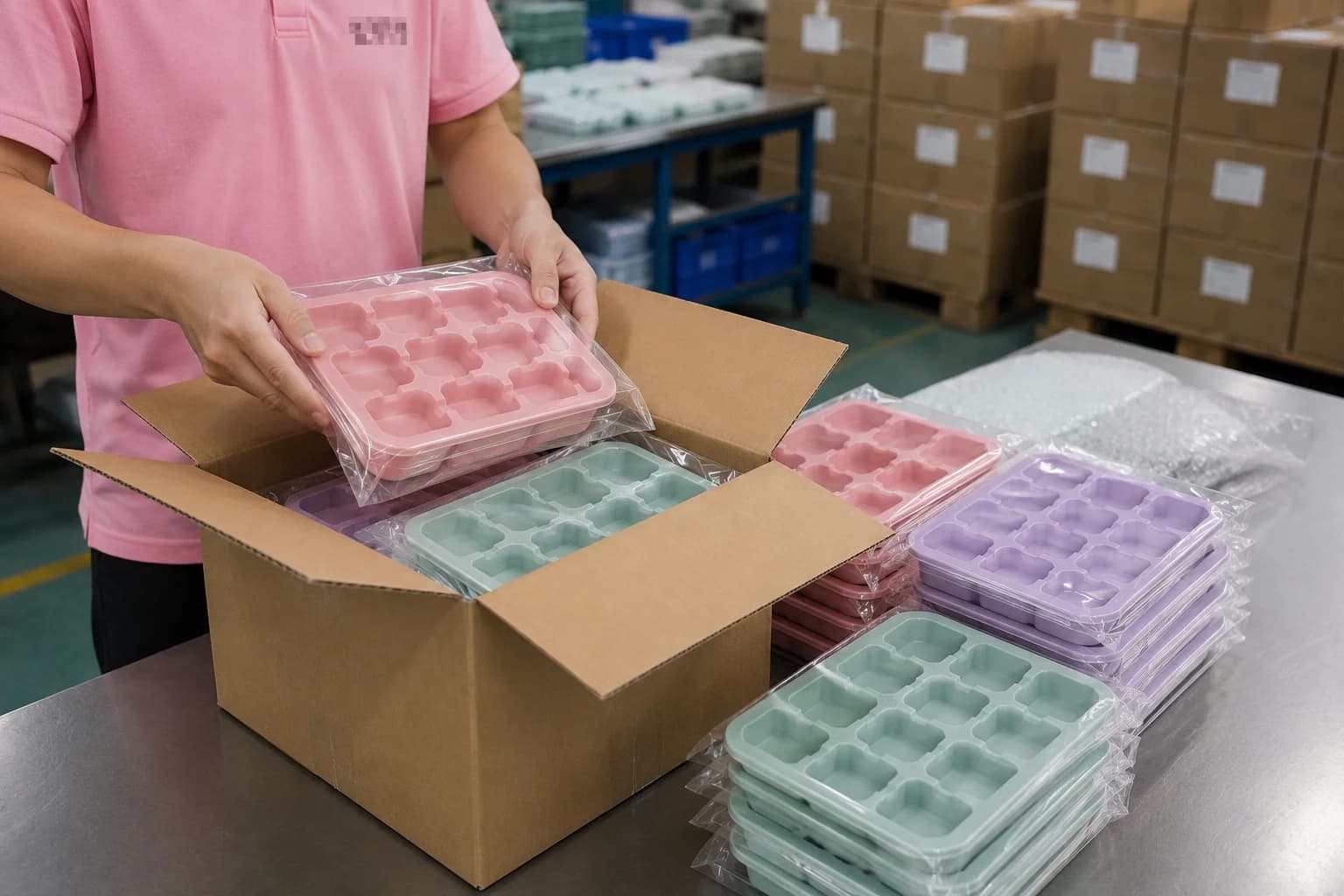
If you are evaluating molds for repeated use — or specifying one for a product line — it helps to work from a structured buyer checklist for sample approval rather than judging a single sample by appearance alone.
5. Choosing a Mold That Supports Clarity
The mold is not a neutral container. Its material, wall thickness, cavity geometry, and surface finish all influence how ice freezes and how it releases.
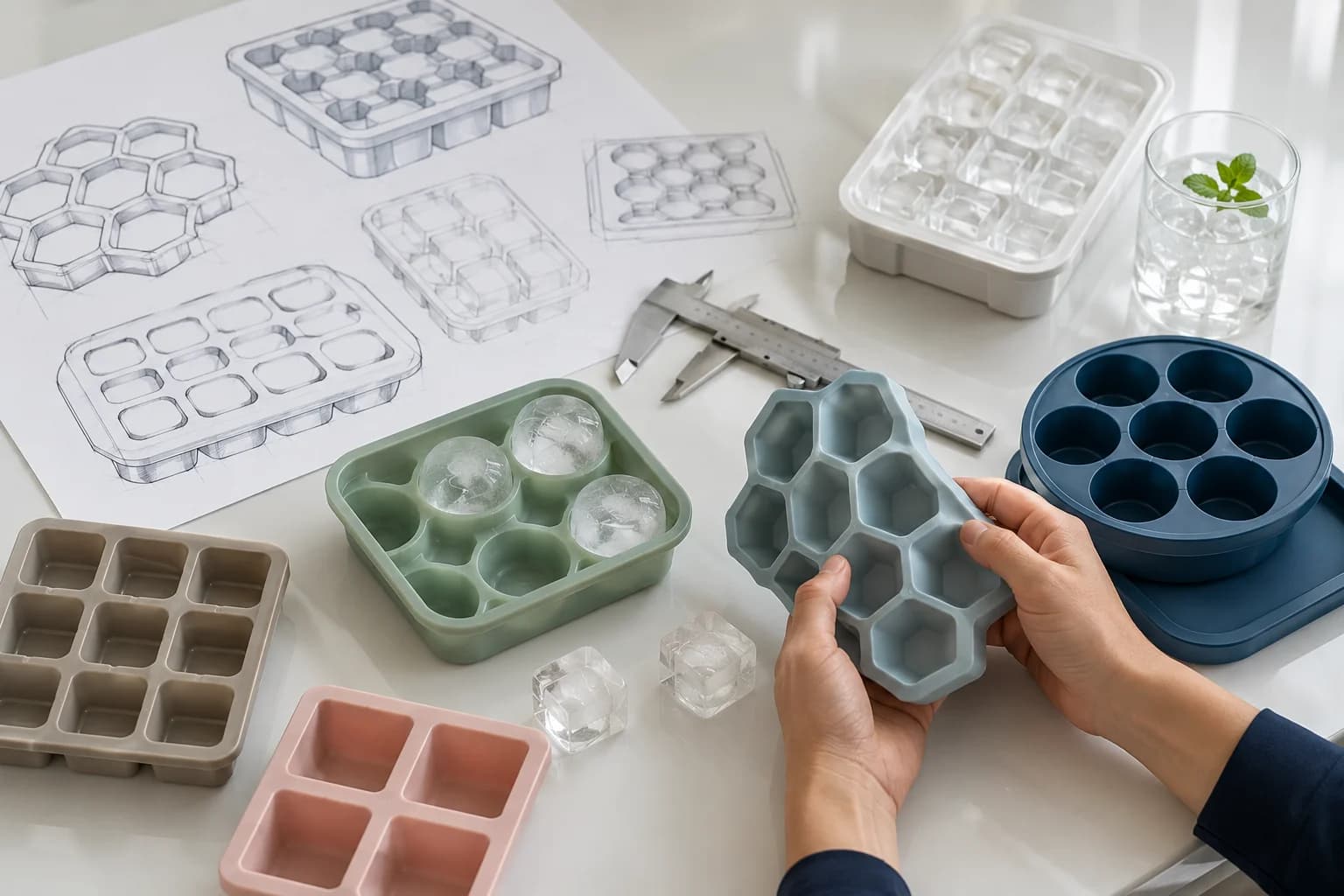
For anyone moving from "making clear ice at home" to "producing clear ice as a product or gift item," the mold becomes a real engineering decision. Custom silicone ice molds are typically specified through cavity design, product shape, size, color, logo, and packaging, with sampling and tooling handled as separate project stages [K1][K2].
A few practical points that come up repeatedly in mold development:
- Cavity design controls the freezing front. A cavity that is deep and narrow freezes differently from one that is wide and shallow. If clarity is a requirement, say so in the design brief rather than after the first sample.
- Surface finish affects perceived clarity. A polished cavity surface produces a smoother cube wall, which reads as clearer even when internal clarity is unchanged.
- Wall thickness affects freeze rate. Thicker silicone walls insulate slightly, which slows the freeze — usually helpful for clarity, but it extends cycle time.
- Logo and shape details create nucleation points. Fine, sharp internal details can trap air. Test them in the sample stage, not at mass production.
- Packaging and color are separate decisions. They affect brand presentation, not ice clarity — keep them out of the clarity discussion so the spec stays measurable.
The sequence matters as much as the mold itself. Custom silicone mold projects generally move from design review through sampling and tooling before production, with MOQ and lead-time planning handled alongside the technical review [K1]. Teams that skip or compress the sampling stage tend to discover clarity and release problems later, when changes are more expensive.
6. Compliance and Claim Boundaries for Ice-Related Products
Only make claims you can substantiate for the exact product, component, and market you are selling.
This is worth stating explicitly because ice molds, ice trays, and serving accessories often sit near food-contact and, occasionally, children's-product categories — and claims tend to expand faster than documentation.
A useful example of the discipline required: in a compliance archive, a silicone baby pacifier set holds a test report showing a pass for specified phthalates under 16 CFR Part 1307, with a matching CPC file [K3]. That is a real, reviewed result. But the same record explicitly cautions that the summary does not list the pacifier-specific requirements of 16 CFR Part 1511, that every component and the age grading must match the tested sample, and that the CPC applies only to the identified private-label product and certifying importer [K3].
The lesson transfers directly to ice mold projects:
- A test report covers the item tested, not a product family.
- Component or material changes can invalidate the basis of a claim.
- Age grading and intended use change the applicable requirement set.
- Market-specific compliance planning should be handled without unsupported certification claims [K1].
For suppliers, the honest position is a narrow one: document what has been tested, state the scope clearly, and decline to imply more. That posture is also good commercial practice, because it survives buyer audits and retailer questionnaires. It reflects the operating principle of making products with respect for quality and responsibility, conducting business with a service-minded approach, and contributing to the industry with accountability [K5].
7. FAQ
Q1. Does distilled water make clear ice on its own?
No. Distilled water removes dissolved minerals, which reduces one source of haze, but it leaves dissolved gas in the water and does nothing about freezing direction. In a standard tray that freezes from all sides, distilled water still produces cloudy cubes. Distilled water is a useful input when combined with degassing and directional freezing — it is not a standalone solution.
Q2. Is boiled water better than distilled water for clear ice?
For clarity specifically, boiled-and-cooled water often outperforms distilled water used straight from the bottle, because boiling removes dissolved gas, which is typically the largest single cause of cloudiness. The ideal combination is low-mineral water that has also been boiled and cooled, frozen slowly in one direction.
Q3. How long does clear ice take to freeze?
Plan on roughly 18 to 24 hours for a large block or a set of large cubes in a home freezer. Faster freezing traps more gas and produces more visible bubbles. If your result is consistently cloudy despite good water and a directional setup, the most likely fix is a slower freeze — more insulation, or a slightly warmer freezer setting — rather than a different water source.
Q4. Can I make clear ice in a silicone mold?
Yes, and silicone is often the better choice because cubes release cleanly without cracking. Place the filled mold in an insulated, open-top container so freezing proceeds from the top down, freeze slowly, and expect to discard the last-frozen portion. For branded or repeated production, define the clarity requirement during cavity design and confirm it at the sample stage [K2].
8. Conclusion
Distilled water is a helpful ingredient, not a solution. If your cubes are still cloudy after switching to distilled water, the water was never the limiting factor — the freezing direction and dissolved gas were.
The reliable path is straightforward: use low-mineral water, boil and cool it to drive off dissolved air, freeze it slowly from one direction in an insulated or open-top setup, and cut away the cloudy last-frozen section. That process, not the water label, is what produces clarity.
For home use, start with the directional-freezing setup and keep your existing water; add distilled water only if your tap water is hard. For product teams, treat clarity as a spec to be designed into the cavity and verified at sampling, keep mold, packaging, and branding decisions separate from clarity requirements, and hold compliance claims to exactly what has been tested for the specific product. If you are sourcing molds for a clear-ice product, the most useful first step is a written brief that states the clarity target, cube dimensions, expected freeze cycle, and market — then let the sampling stage prove it.